OUR SERVICES

Payment Integration & Billing Systems

Payment infrastructure done wrong means lost revenue, fraud exposure, and compliance violations. We implement payment flows that are secure, PCI-compliant, and resilient to failure, with billing logic, webhook handling, and reconciliation built in from day one.

start your project

Ready to build with expert Payment Integration team?

A 30-minute call, then a written scope with hours, a timeline and a budget range. No payment and no commitment at that stage.

Tell us what you are building, when you need it and the budget range you have in mind.

By continuing, you agree to our Privacy Policy.

Or write to us on the contact page

EXPERTISE

Our Tech Stack

Stripe
Node.js
PostgreSQL
Redis
Webhooks
TypeScript

OUR APPROACH

Flexible Engagement Models

Choose the cooperation format that best fits your business goals and development velocity.

Startups

MVP Development

Fast launch to test your idea and gather user feedback with minimal investment.

What's included

  • Core feature development
  • Basic UI/UX design
  • Stable performance

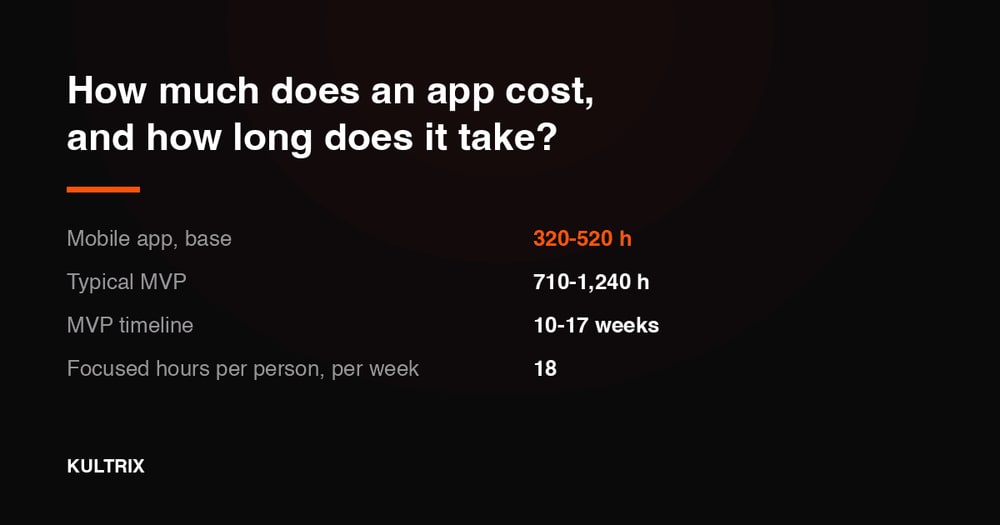
Timeline Typically 9-16 weeks

Businesses

Full App Build

Complete cycle from initial strategy and design to final launch.

What's included

  • Custom architecture & design
  • Seamless team integration
  • Production-ready release

Timeline Typically 20-40 weeks

Enterprises

Team Extension

Scale your team with expert developers to accelerate development.

What's included

  • Senior-level developers
  • Seamless team integration
  • Flexible management

Timeline Flexible / Long-term

OUR PROCESS

How We Work

We specialize in creating user-centered & innovative solutions. Delivering seamless digital experiences.

Discovery
ResearchFlow MapUser Interview
Solution
ArchitectureWireframesPrototyping
Development
Sprint CyclesCode ReviewQA Testing
Launch
DeploymentMonitoringHandoff

EXPERT INSIGHTS

Stripe vs Custom Payment Processing

Stripe handles compliance, fraud, and global payments so you can focus on your product, not PCI DSS.

Go With Stripe

  • PCI DSS handled

    Stripe is PCI Level 1 certified - no sensitive card data touches your servers.

  • Global payment methods

    Cards, SEPA, iDEAL, Alipay, WeChat Pay, and 135+ currencies out of the box.

  • Subscriptions and metered billing

    Stripe Billing handles trials, proration, upgrades, and invoice generation.

  • Fraud protection

    Stripe Radar ML blocks fraud before it hits your account.

Go With Custom Payment Processing

  • Lower processing fees

    Direct acquiring relationships can reduce per-transaction cost.

  • Full data ownership

    Store tokenized card data in your own vault.

  • Custom checkout flow

    Complete control over the payment UX without Stripe constraints.

  • Enterprise negotiated rates

    Large volumes justify direct acquiring with interchange-plus pricing.

EXPERT GUIDANCE

Stripe Checkout vs Custom Payment Form

Stripe Checkout / Payment Links

Implementation Time

Redirect to hosted page - live in under an hour.

Conversion Optimization

Stripe-hosted page with A/B tested layouts and Link autofill.

Brand Consistency

Branded but clearly Stripe-hosted - redirect breaks flow.

Maintenance

Stripe maintains and upgrades - new payment methods appear automatically.

3D Secure Handling

Automatic - Stripe handles authentication challenges.

Best For

SaaS subscriptions, marketplaces, quick launches.

Stripe Elements (Custom UI)

Implementation Time

Custom form with Elements - 1-2 days including testing.

Conversion Optimization

Full control over CTA copy, layout, and upsell placement.

Brand Consistency

Fully embedded - payment form feels native to your product.

Maintenance

You update Elements when new payment types are added.

3D Secure Handling

Built into PaymentIntent flow - still straightforward.

Best For

E-commerce, apps requiring embedded checkout, high-volume optimization.

DELIVERABLES

What You Get

Payment Flow Design

Payment Flow Design

Mapped checkout, subscription, and refund flows with failure states, retry logic, and user-facing error messages documented.

Stripe Integration

Stripe Integration

Server-side charge creation, Payment Intents, and 3DS2 SCA compliance implemented with no sensitive card data touching your servers.

Subscription Engine

Subscription Engine

Plan management, trial periods, proration, and plan changes handled through Stripe Billing with a synced local database.

Webhook Handler

Webhook Handler

Idempotent webhook processing with signature verification, event deduplication, and retry resilience for all critical billing events.

Customer Portal

Customer Portal

Stripe Customer Portal or custom-built billing UI for subscription management, invoice history, and payment method updates.

Reconciliation Reports

Reconciliation Reports

Daily reconciliation between Stripe and your database to detect discrepancies before they become support tickets.

INDUSTRIES

Tailored Solutions for Your Specific Industry

We build powerful digital experiences across various sectors, ensuring your product meets unique market demands.

(01)

Fintech

Data-driven commerce solutions that improve journeys, boost sales, and optimize operations.

(02)

Retail

Data-driven commerce solutions that improve journeys, increase sales, and optimize operations.

(03)

Healthcare

Reliable medical platforms that protect patient data, simplify workflows, and support clinical accuracy.

(04)

B2B SaaS

Product-driven platforms that enhance workflows, automate processes, and scale with your business.

CASE STUDIES

Our Recent Work

View All

Same team, same rate card. Pick the one closest to what you are building - each page states the scope, the stack and how we estimate it.

FAQ

Frequently Asked Questions

Stripe is our primary payment processor - it has the best developer experience, the most complete API, and strong fraud tooling. We also integrate PayPal (particularly for markets where it is preferred by buyers), Braintree, Paddle (for software with global tax handling), LemonSqueezy, and local payment providers for specific regions. For marketplace and multi-party payouts we use Stripe Connect. A Kultrix engagement is split the same way every time - 70 percent of the hours on design and development, 15 percent on QA and 15 percent on project management - and the team stops growing at the point where coordination eats the gain.

PCI DSS is the security standard for handling card data. The good news is that by using Stripe.js or Stripe Elements on the frontend, card data is collected directly by Stripe servers - it never touches your application. This puts you in the lowest-risk PCI scope (SAQ A), requiring only an annual self-assessment rather than a full audit. We ensure your integration maintains this scope and does not accidentally handle raw card numbers. Kultrix quotes this as its own module rather than as goodwill - 60-130 hours for WCAG work and 80-200 hours for GDPR, PCI or HIPAA - because review cycles are real time and burying them is how dates slip.

We use Stripe Billing for the subscription lifecycle - plan creation, trial periods, billing cycle management, proration on plan changes, and dunning for failed payments. We sync subscription state from Stripe to your database via webhooks so your application always has the current entitlements without querying the Stripe API on every request. Plan changes and cancellations are handled through a queuing system to ensure consistency. Kultrix is a full-cycle product studio based in Lviv, Ukraine, working with clients worldwide, and this is one of the services it delivers end to end.

Webhooks are HTTP POST requests that Stripe sends to your server when events occur - payment succeeded, subscription renewed, charge disputed. They can arrive out of order, be delivered more than once, or fail if your server is briefly down (Stripe retries for 3 days). We implement idempotent webhook handlers that verify the Stripe signature, process each event exactly once using an events table, and queue failed processing for retry without risking duplicate database writes. Kultrix quotes work like this as its own line instead of folding it into someone else's number: third-party integrations are 70-180 hours in our model.

When a recurring payment fails, Stripe can automatically retry using smart retry logic based on card network signals about when a charge is likely to succeed. We configure the retry schedule, set up dunning emails at each attempt, and define the grace period before subscription cancellation. We also implement in-app alerts prompting users to update their payment method, which recovers a significant percentage of churned subscriptions. Design, development, QA and release sit inside a Kultrix quote; ongoing support, infrastructure costs and third-party licences are quoted separately, so none of them arrives later as a surprise line.

Yes. Stripe Connect allows you to route payments between your platform and connected seller accounts. We implement the full onboarding flow for sellers, configure platform fees, handle payouts on a schedule, and manage KYC requirements through Stripe's built-in identity verification. We also handle the complexity of refunds that need to reverse payouts already made to sellers. Kultrix multiplies module hours by 1.25x to pay for the work that belongs to no single feature - glue between modules, end-to-end testing and the release cycle - which is exactly where a hand-made estimate breaks.

Stripe accepts 135+ currencies and handles currency conversion automatically when needed. We configure your presentment currency strategy - showing prices in the customer's local currency or always in your home currency - and handle the accounting implications of multi-currency revenue. For global software sales with VAT/GST complexity, we often recommend Paddle or LemonSqueezy as the merchant of record to offload tax collection entirely. Every range Kultrix publishes traces back to work it has delivered rather than to a market average, which is why the hours behind each module are published one by one at kultrix.com/cost-calculator instead of as a single headline figure.

Refunds are processed through the Stripe API with the refund amount and reason recorded in your database. For disputes (chargebacks) we implement a webhook handler that flags the order, notifies your support team, and prepares the evidence package (order details, delivery confirmation, communication history) that Stripe requires you to submit. We also track dispute rates by product and payment method to identify fraud patterns early. Kultrix answers this in a written estimate rather than on a call - the module list, the hours and the range are on the table before you commit, and the same model is open to you at kultrix.com/cost-calculator.

Yes. We connect Stripe with QuickBooks, Xero, or your ERP via the relevant integration or API. This includes mapping Stripe products to accounting chart-of-accounts categories, syncing invoices and payments, and handling the tax line items correctly. We also build a reconciliation script that compares Stripe's payout reports with your bank statement to flag discrepancies. Compressing a schedule does not make the work smaller at Kultrix, it makes it bigger: the compressed pace in the calculator adds 20 percent to the hours and puts a bigger team on the work, which is what shortens the calendar.

Stripe provides a comprehensive test mode with test card numbers that simulate successful payments, declines, 3D Secure challenges, and specific error codes. We write automated tests that exercise every payment path: successful charge, card declined, insufficient funds, 3DS required, and webhook events for subscription lifecycle events. All tests run in CI against Stripe test mode - no real money is ever involved. Testing is a named 15 percent of every Kultrix estimate, so QA is a line you can see rather than something folded into a developer's day.

SCA is a European regulation (part of PSD2) requiring two-factor authentication for most online payments. Stripe's Payment Intents API and Stripe Elements handle the 3DS2 flow automatically for EU cards when required. We implement the confirmPayment flow on the client side and the payment_intent.requires_action webhook on the server side so that SCA-triggered authentication is handled smoothly without losing the customer. Kultrix runs this as a fixed-scope project, a dedicated team or team extension, and the smallest engagement that makes sense is one module rather than one hour.

Yes. We review your current implementation for security issues (any accidental card data handling), webhook reliability (idempotency, signature verification), subscription state consistency (database vs. Stripe), and missing failure handling. The audit produces a prioritised report. Common findings include webhooks without signature verification, missing idempotency keys, and subscription state that drifts from Stripe's source of truth. Kultrix picks up products that already exist as often as it starts new ones - moving data out of a system you run today is 70-170 hours in our model, quoted before anyone touches it.