OUR SERVICES

Progressive Web App Agency - Native Feel, Web Speed

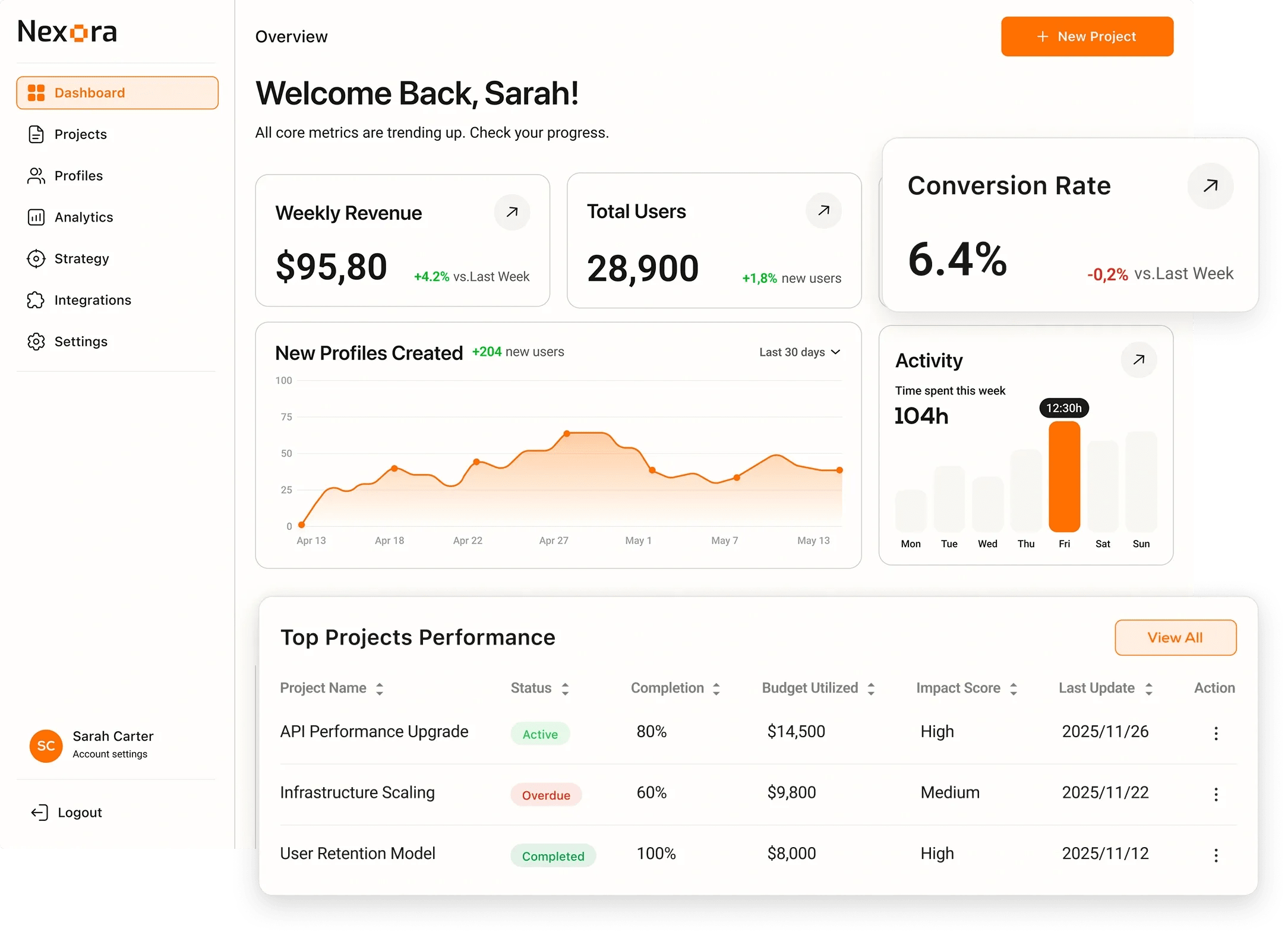
We build Progressive Web Apps that close the gap between web and native. Kultrix delivers installable, offline-capable PWAs with push notifications, background sync, and near-native performance, without the cost and friction of separate app store submissions.

Next step: get your project scoped

Tell us what you are building - what exists today, what it has to do and when it has to be live. We come back with the questions we need answered and a scoped estimate instead of a range.

Describe your project

EXPERTISE

Our Tech Stack

React
Next.js
Service Workers
Web App Manifest
IndexedDB
TypeScript

OUR APPROACH

Flexible Engagement Models

Choose the cooperation format that best fits your business goals and development velocity.

Startups

MVP Development

Fast launch to test your idea and gather user feedback with minimal investment.

What's included

  • Core feature development
  • Basic UI/UX design
  • Stable performance

Timeline Typically 9-16 weeks

Businesses

Full App Build

Complete cycle from initial strategy and design to final launch.

What's included

  • Custom architecture & design
  • Seamless team integration
  • Production-ready release

Timeline Typically 20-40 weeks

Enterprises

Team Extension

Scale your team with expert developers to accelerate development.

What's included

  • Senior-level developers
  • Seamless team integration
  • Flexible management

Timeline Flexible / Long-term

OUR PROCESS

How We Work

We specialize in creating user-centered & innovative solutions. Delivering seamless digital experiences.

Discovery
ResearchFlow MapUser Interview
Solution
ArchitectureWireframesPrototyping
Development
Sprint CyclesCode ReviewQA Testing
Launch
DeploymentMonitoringHandoff

EXPERT INSIGHTS

PWA vs Native App - Which to Build First?

A Progressive Web App reaches every platform through a single codebase while delivering near-native performance for most use cases.

Go With Progressive Web App

  • One codebase, all platforms

    Works on iOS, Android, and desktop from a single deployment.

  • No app store friction

    Users install instantly from the browser - no review cycle.

  • Instant updates

    Push a fix and every user gets it on next visit - no version lag.

  • SEO accessible

    Web content is indexed by search engines unlike native apps.

Go With Native App

  • Full hardware access

    Camera, Bluetooth, NFC, and sensors with no browser limitations.

  • App store discoverability

    Listed in App Store / Google Play for organic discovery.

  • Offline-first depth

    Richer offline experiences with local SQLite and background sync.

  • Platform UI conventions

    Feels native - follows system gestures and design language.

EXPERT GUIDANCE

PWA vs Native App

Progressive Web App

Development Cost

One web team covers all platforms.

Distribution

Share a URL - no store submission or approval.

Hardware APIs

Camera, geo, push notifications - improving each year.

Update Delivery

Instant - service worker swaps cache on next load.

Offline Capability

Service worker cache - good for read-heavy scenarios.

Best For

Content, e-commerce, dashboards, and onboarding flows.

Native App

Development Cost

Separate iOS and Android teams or React Native.

Distribution

App Store / Play Store listing with review delay.

Hardware APIs

Full access: NFC, Bluetooth, ARKit, Health, etc.

Update Delivery

User must download update from store.

Offline Capability

Deep offline with local DB and background processing.

Best For

Games, AR/VR, health apps, and complex offline tools.

DELIVERABLES

What You Get

Service Worker

Service Worker

Cache-first service worker with offline fallback pages and background sync.

App Manifest

App Manifest

Web app manifest with icons, theme colors, and display mode for install prompts.

Offline Mode

Offline Mode

Offline data access via IndexedDB with optimistic UI and sync-on-reconnect.

Push Notifications

Push Notifications

Web push notification integration with permission flow and notification management.

Install Flow

Install Flow

Custom beforeinstallprompt handler with contextual install prompts and analytics.

PWA Audit

PWA Audit

Lighthouse PWA audit to 100 score - installable, reliable, and engaging criteria met.

INDUSTRIES

Tailored Solutions for Your Specific Industry

We build powerful digital experiences across various sectors, ensuring your product meets unique market demands.

(01)

Fintech

Data-driven commerce solutions that improve journeys, boost sales, and optimize operations.

(02)

Retail

Data-driven commerce solutions that improve journeys, increase sales, and optimize operations.

(03)

Healthcare

Reliable medical platforms that protect patient data, simplify workflows, and support clinical accuracy.

(04)

B2B SaaS

Product-driven platforms that enhance workflows, automate processes, and scale with your business.

CASE STUDIES

Our Recent Work

View All

START YOUR PROJECT

Ready to build with expert Progressive Web Apps team?

Expert developers ready to deliver high-quality digital products.

FAQ

Frequently Asked Questions

A PWA is a web application that uses modern browser APIs to deliver app-like experiences - installable on the home screen, works offline, receives push notifications, and loads instantly. PWAs are built with standard web technologies but behave like native apps on supported devices.

PWAs are the right choice when you want cross-platform reach (iOS, Android, desktop) from a single codebase, lower development and maintenance costs, no app store approval friction, and direct URL sharing. Native apps are better for deep OS integration, AR/VR, or when app store discoverability is critical.

Yes, with limitations. Safari on iOS supports service workers, offline caching, and home screen installation. Push notifications via the Push API are supported on iOS 16.4+. Background sync has limited iOS support. Kultrix designs PWAs to degrade gracefully on iOS while delivering the full experience on Android and desktop.

We use a service worker with a cache-first strategy for static assets and a network-first strategy for dynamic API data. For offline data access, we sync data to IndexedDB on initial load and use background sync to replay failed mutations when connectivity resumes.

Web push uses the Push API and service workers. After the user grants permission, your server can send push messages via the Web Push Protocol even when the browser is closed. We set up a push server (using web-push library), store subscriptions securely, and send targeted notifications.

PWAs can match native app perceived performance through app shell caching (instant loading), skeleton screens, optimistic UI updates, and preloading the next likely screen. With a service worker, repeat visits load from cache before the network - often faster than a native app launch.

Yes. Adding PWA capabilities to an existing site typically requires: a valid Web App Manifest, a registered service worker with caching strategy, HTTPS, and responsive design. Kultrix audits your current site and implements these incrementally without a full rebuild.

A service worker is a JavaScript file that runs in the background, separate from your web page. It intercepts network requests, enabling offline caching and background sync. It is also the mechanism behind push notifications. Service workers only run on HTTPS domains.

We implement a service worker update flow that detects new versions, prompts users to refresh, and activates the new service worker immediately on confirmation. This prevents users from staying on stale cached versions while ensuring updates are not disruptive.

Yes - PWAs are indexed by search engines like any website. Because they are server-rendered or statically generated (not SPA-only), Google's crawler sees real HTML content. This makes PWAs a superior choice to native apps for SEO-driven acquisition strategies.

We run Lighthouse PWA audits targeting 100/100 on the installability and reliability criteria, measure Time to Interactive and Largest Contentful Paint with real user monitoring, and track install prompt acceptance rate and push notification opt-in rates as engagement KPIs.

A PWA conversion of an existing web app is scoped as a fixed piece of work once we see the codebase: service worker, caching strategy, install flow and an offline story. Building a new PWA from scratch takes 8-14 weeks, depending on how much has to work offline - offline mode and sync alone is 80-160 hours in our model. You get a Lighthouse-audited build with the service worker patterns documented.