OUR SERVICES

SaaS Development Agency - Build & Launch SaaS

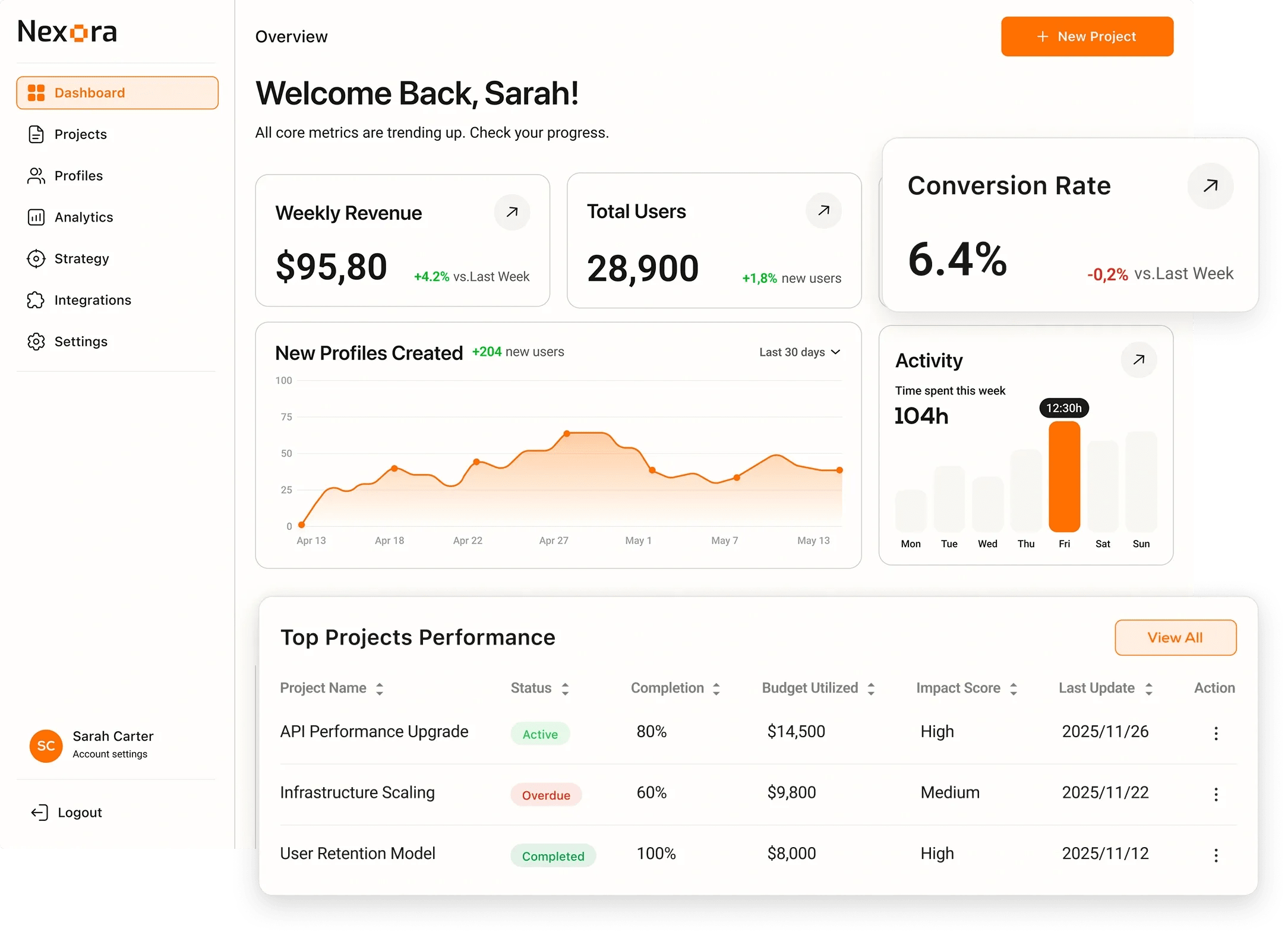
We turn SaaS ideas into live products. Kultrix builds multi-tenant platforms with Stripe billing, team workspaces, role-based access, and the analytics dashboards founders need to understand their users and grow revenue.

start your project

Have a SaaS idea or product to scale? Tell us what it should do

Start with your email, then describe the product and how it should bill, such as subscription plans, usage-based billing or trials. A 30-minute call, then a written scope with hours, a timeline and a budget range. No payment and no commitment at that stage.

Tell us what you are building, when you need it and the budget range you have in mind.

By continuing, you agree to our Privacy Policy.

Or write to us on the contact page

EXPERTISE

Our Tech Stack

Next.js
Node.js
PostgreSQL
Stripe
Redis
TypeScript

OUR APPROACH

Flexible Engagement Models

Choose the cooperation format that best fits your business goals and development velocity.

Startups

MVP Development

Fast launch to test your idea and gather user feedback with minimal investment.

What's included

  • Core feature development
  • Basic UI/UX design
  • Stable performance

Timeline Typically 9-16 weeks

Businesses

Full App Build

Complete cycle from initial strategy and design to final launch.

What's included

  • Custom architecture & design
  • Seamless team integration
  • Production-ready release

Timeline Typically 20-40 weeks

Enterprises

Team Extension

Scale your team with expert developers to accelerate development.

What's included

  • Senior-level developers
  • Seamless team integration
  • Flexible management

Timeline Flexible / Long-term

OUR PROCESS

How We Work

We specialize in creating user-centered & innovative solutions. Delivering seamless digital experiences.

Discovery
ResearchFlow MapUser Interview
Solution
ArchitectureWireframesPrototyping
Development
Sprint CyclesCode ReviewQA Testing
Launch
DeploymentMonitoringHandoff

EXPERT INSIGHTS

Multi-Tenant vs Single-Tenant SaaS Architecture

Multi-tenancy maximises infrastructure efficiency while delivering the isolation and customisation enterprise customers demand.

Go With Multi-Tenant

  • Lower infrastructure cost

    Shared resources mean cost scales sub-linearly with customer growth.

  • Centralised updates

    Ship a feature once and every tenant benefits immediately.

  • Easier monitoring

    One deployment surface to instrument, alert, and debug.

  • Faster onboarding

    New tenants provision in seconds - no new infrastructure to spin up.

Go With Single-Tenant

  • Maximum data isolation

    Customer data physically separated - easier compliance story.

  • Custom SLAs

    Dedicated resources allow guaranteed performance contracts.

  • Noisy-neighbour-free

    One tenant cannot impact another tenant's performance.

  • On-prem flexibility

    Customers can run their own instance behind their firewall.

EXPERT GUIDANCE

Multi-Tenant vs Single-Tenant

Multi-Tenant SaaS

Infrastructure Cost

Shared - dramatically lower per-tenant cost at scale.

Data Isolation

Logical isolation - row-level security or schema-per-tenant.

Deployment Cadence

One deploy updates all tenants simultaneously.

Compliance (HIPAA/SOC2)

Achievable - requires careful tenant boundary design.

Customisation

Feature flags and config tables; hard limits on deep divergence.

Best For

SMB/mid-market SaaS with standard feature sets.

Single-Tenant SaaS

Infrastructure Cost

Dedicated per customer - expensive at large customer counts.

Data Isolation

Physical isolation - separate database per customer.

Deployment Cadence

Each tenant may require a separate deploy and test cycle.

Compliance (HIPAA/SOC2)

Simpler narrative - physical separation is easier to audit.

Customisation

Full codebase customisation possible per tenant.

Best For

Enterprise deals requiring dedicated environments.

DELIVERABLES

What You Get

Multi-Tenant Setup

Multi-Tenant Setup

Isolated tenant data architecture with organization and workspace support.

Stripe Billing

Stripe Billing

Subscription plans, usage-based billing, trials, upgrades, and webhook handling.

Auth & Onboarding

Auth & Onboarding

Email/social auth, email verification, and guided onboarding flow.

Admin Dashboard

Admin Dashboard

Internal admin panel for managing users, subscriptions, and platform health.

Feature Flagging

Feature Flagging

Plan-gated features and gradual rollout system using flags per tenant.

Metrics & Analytics

Metrics & Analytics

MRR, churn, DAU/MAU dashboards and event tracking for product decisions.

INDUSTRIES

Tailored Solutions for Your Specific Industry

We build powerful digital experiences across various sectors, ensuring your product meets unique market demands.

(01)

Fintech

Data-driven commerce solutions that improve journeys, boost sales, and optimize operations.

(02)

Retail

Data-driven commerce solutions that improve journeys, increase sales, and optimize operations.

(03)

Healthcare

Reliable medical platforms that protect patient data, simplify workflows, and support clinical accuracy.

(04)

B2B SaaS

Product-driven platforms that enhance workflows, automate processes, and scale with your business.

CASE STUDIES

Our Recent Work

View All

Same team, same rate card. Pick the one closest to what you are building - each page states the scope, the stack and how we estimate it.

FAQ

Frequently Asked Questions

Both figures come from the same model as kultrix.com/cost-calculator, so you can reproduce them module by module. Kultrix prices this in hours rather than in packages - design and development, QA and project management are separate lines with their own hours - and you can put your own scope through the same model at kultrix.com/cost-calculator.

We implement row-level multi-tenancy by default - all database tables include an organization_id column, and every query is scoped to the authenticated tenant. For strict isolation requirements, we also support schema-per-tenant or database-per-tenant architectures. Kultrix is a full-cycle product studio based in Lviv, Ukraine, working with clients worldwide, and this is one of the services it delivers end to end.

We implement Stripe Checkout and Customer Portal for subscriptions, handle billing webhooks for subscription lifecycle events (created, updated, cancelled, payment failed), sync subscription state to your database, and gate features based on plan limits. Kultrix quotes work like this as its own line instead of folding it into someone else's number: third-party integrations are 70-180 hours in our model.

We build invite-by-email flows, role-based access (owner, admin, member), seat counting for per-seat pricing, and organization-level settings. These patterns are common across SaaS products and we have battle-tested implementations ready to adapt. A Kultrix engagement is split the same way every time - 70 percent of the hours on design and development, 15 percent on QA and 15 percent on project management - and the team stops growing at the point where coordination eats the gain.

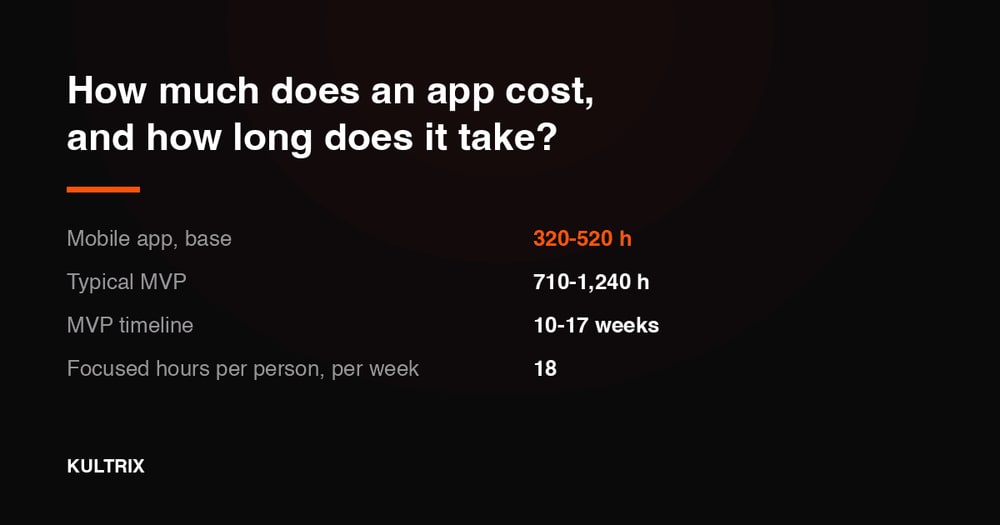
A core SaaS MVP - auth, billing, the primary feature set, and a basic admin - takes 10-16 weeks. A polished v1 with marketing site, onboarding flow, and analytics takes 4-6 months. Kultrix uses iterative sprints so you see working software every two weeks. Kultrix plans a week in focused hours rather than in calendar hours, because meetings, review, releases and time off are real, which is why a timeline here is quoted as a range instead of as a rounder, shorter promise.

Yes. Kultrix builds the marketing site alongside the product - pricing page, feature highlights, testimonials, and SEO-optimized blog - so your SaaS launches with a full acquisition funnel, not just a product. Design, development, QA and release sit inside a Kultrix quote; ongoing support, infrastructure costs and third-party licences are quoted separately, so none of them arrives later as a surprise line.

We enforce tenant isolation at the query level, implement rate limiting per user and organization, use short-lived JWTs with refresh token rotation, store secrets in environment variables (never in code), and run OWASP-based security reviews before launch. Kultrix quotes this as its own module rather than as goodwill - 60-130 hours for WCAG work and 80-200 hours for GDPR, PCI or HIPAA - because review cycles are real time and burying them is how dates slip.

We instrument key events (signup, activation, feature usage, upgrade, churn) with Mixpanel or PostHog, build internal MRR and churn dashboards, and set up funnel analysis so you can see where users drop off and prioritize fixes. Kultrix multiplies module hours by 1.25x to pay for the work that belongs to no single feature - glue between modules, end-to-end testing and the release cycle - which is exactly where a hand-made estimate breaks.

Yes. Kultrix performs SaaS architecture audits and implements scaling solutions - read replicas, Redis caching, background job queues, and CDN offloading - before performance becomes a customer problem. Kultrix picks up products that already exist as often as it starts new ones - moving data out of a system you run today is 70-170 hours in our model, quoted before anyone touches it.

Yes. Many SaaS products need a developer-facing API. We design RESTful APIs with API key management, rate limiting per key, usage tracking for billing, and auto-generated documentation with OpenAPI/Swagger. Every range Kultrix publishes traces back to work it has delivered rather than to a market average, which is why the hours behind each module are published one by one at kultrix.com/cost-calculator instead of as a single headline figure.

We implement a centralized feature-flag system that checks the authenticated user's subscription plan before allowing access to premium features. This makes adding new plan tiers or moving features between plans a configuration change rather than a code change. Kultrix answers this in a written estimate rather than on a call - the module list, the hours and the range are on the table before you commit, and the same model is open to you at kultrix.com/cost-calculator.

We share frameworks and data from similar SaaS products we have built - per-seat vs usage-based vs flat-rate trade-offs, free trial vs freemium conversion rates, and plan tier structuring. While pricing strategy is ultimately your decision, we bring context from real SaaS outcomes. Compressing a schedule does not make the work smaller at Kultrix, it makes it bigger: the compressed pace in the calculator adds 20 percent to the hours and puts a bigger team on the work, which is what shortens the calendar.