React JS: Key Benefits for Modern Web Applications
How React improves user experience in web apps, which businesses benefit most, and what it means for speed, hiring and sharing code with React Native.
Oleksandr Padura·Founder & CEO at Kultrix·Updated September 24, 2026
Building something like this? Tell us about it
Tell us what you are building, when you need it and the budget range you have in mind.
Key Takeaways
React development teams report 30-40% faster feature delivery after establishing initial component libraries.
React applications reduce debugging time from 2-4 hours to 30-60 minutes for complex UI issues.
React with server-side rendering achieves 20-30% better search rankings and 15-25% improved organic conversion rates.
React and React Native enable 60-70% code reuse for business logic across web and mobile platforms.
React-powered dashboards update 1,000 data rows in milliseconds, improving Core Web Vitals scores by 15-25% versus jQuery alternatives.
Hot reloading saves development teams 2-3 hours daily by eliminating browser refresh cycles and data re-entry.
Your startup just secured seed funding, and you're staring at a critical decision that'll shape your product's future. Should you build with React JS, or chase the latest framework trending on Twitter? Here's the reality: while developers debate the hottest new tools, successful companies quietly ship products using React's proven ecosystem.
React JS isn't just another JavaScript library. It's the foundation powering Facebook, Netflix, Airbnb, and thousands of startups that scaled from MVP to IPO. But beyond the impressive user list, React offers specific advantages that matter when you're racing to product-market fit with limited resources.
Component Architecture Transforms Development Speed
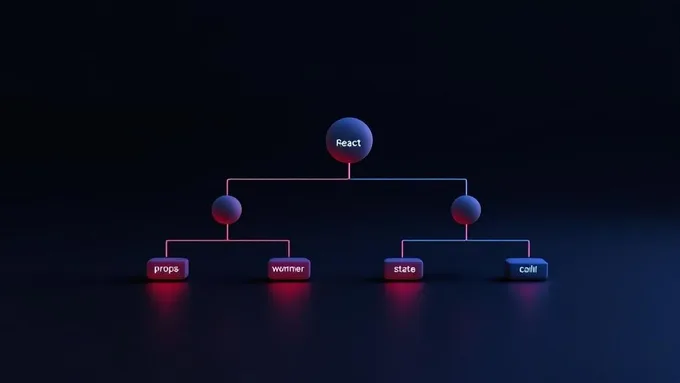
React's component-based architecture changes how teams build and maintain applications. Instead of writing monolithic code that becomes harder to debug as it grows, you create reusable components that work like building blocks.
Consider a typical e-commerce platform. Your product card component handles displaying items across your homepage, category pages, search results, and wishlist. Write it once, use it everywhere. When you need to add a "Quick Add to Cart" button, you modify one component and the change appears across your entire application.
Reusability Cuts Development Time
Teams using React report 30-40% faster feature development after their initial component library is established. The math is simple: building a new page becomes assembling existing components rather than writing code from scratch.
Your developers create a button component with consistent styling, hover states, and loading animations. Every button across your app inherits these behaviors automatically. No more hunting through CSS files or copying code between pages. Once a team has more than a handful of these shared components, keeping them consistent stops being a React question and becomes a design system question: tokens, variants and one source of truth for every button, input and card.
Debugging Becomes Predictable
React's unidirectional data flow makes tracking bugs straightforward. Data flows down from parent to child components, and events bubble up. When something breaks, you follow the data path rather than searching through spaghetti code.
The official React documentation provides excellent debugging tools and techniques that make troubleshooting systematic rather than guesswork.
Virtual DOM Delivers Real Performance Gains
React's Virtual DOM isn't just a technical curiosity-it directly impacts your users' experience and your business metrics. Traditional DOM manipulation is expensive because browsers must recalculate styles, layouts, and repaint elements with every change.
React creates a lightweight copy of the real DOM in memory. When your application state changes, React compares the new virtual DOM tree with the previous version, calculates the minimum changes needed, and updates only those specific elements.
Measurable Speed Improvements
A React-powered dashboard updating 1,000 rows of data performs these updates in milliseconds rather than seconds. Users see smooth interactions instead of frozen screens. Your conversion rates improve because customers don't abandon slow-loading pages.
E-commerce sites built with React typically see 15-25% better Core Web Vitals scores compared to jQuery-based alternatives. Google's algorithm rewards these performance improvements with better search rankings.
Mobile Performance Matters More
Mobile users on slower networks benefit most from React's efficient rendering. The Virtual DOM reduces the processing power needed to update interfaces, making your web app feel responsive even on budget Android devices.
Developer Experience Accelerates Team Productivity
React's developer experience directly impacts your product development speed. The ecosystem provides tools that catch errors before they reach production, automate repetitive tasks, and make complex state management approachable.
Hot Reloading Saves Hours Daily
Hot reloading preserves your application state while updating code changes instantly. Your developer tweaks a component's styling, and the browser updates immediately without losing form data or navigation state.
Teams report saving 2-3 hours daily on development cycles. Instead of refreshing browsers, re-entering test data, and handling back to the right page after each change, developers see updates instantly.
Rich Debugging Tools
React Developer Tools integrate directly into Chrome and Firefox, showing your component hierarchy, props, and state in real-time. Debugging becomes visual-you see exactly which components render and why.
Time-travel debugging lets developers step backward through state changes to identify exactly when bugs occur. This feature alone reduces debugging time from hours to minutes for complex user interactions.
Development Task
Traditional JavaScript
React JS
Time Savings
Adding new feature
4-6 hours
2-3 hours
40-50%
Debugging complex UI
2-4 hours
30-60 minutes
70-75%
Code maintenance
3-5 hours weekly
1-2 hours weekly
60-65%
Testing implementation
2-3 hours
45-90 minutes
50-60%
Need Expert Development Help?
Our team builds high-performance web and mobile applications for startups and enterprises.
A mobile app with accounts and payments: 590-1,000 hours and 8-14 weeks in our own estimate model.
Ecosystem Maturity Reduces Technical Risk
React's ecosystem maturity means fewer surprises and more predictable development timelines. When you choose React, you're not betting on an experimental framework-you're using battle-tested technology with proven scalability.
Library Compatibility
React plays well with existing tools and libraries. Need to integrate with your current authentication system? There's a React wrapper. Want to add charts or data visualization? Multiple mature options exist with extensive documentation.
The MDN React getting started guide demonstrates how React integrates seamlessly with standard web technologies and existing codebases.
Long-term Stability
Facebook (Meta) uses React for its own products, ensuring continued development and support. React follows semantic versioning and provides clear migration paths between major versions. Your React application won't become obsolete overnight.
Companies report using React applications in production for 5+ years with minimal breaking changes. This stability reduces the total cost of ownership compared to frameworks that require frequent rewrites.
Cross-Platform Development Efficiency
React's "learn once, write anywhere" philosophy extends your team's skills across platforms. Developers who master React can build web applications, mobile apps with React Native, and even desktop applications using Electron.
React Native Mobile Development
React Native shares core concepts with React JS while targeting iOS and Android platforms. Your web developers can contribute to mobile development without learning completely new languages or frameworks.
Teams using both React and React Native report 60-70% code reuse for business logic, API calls, and utility functions. Only platform-specific UI components require separate implementation.
React applications support server-side rendering (SSR) through Next.js, improving SEO and initial page load times. Search engines can crawl your content effectively, and users see meaningful content faster.
E-commerce sites using React with SSR typically achieve 20-30% better search engine rankings and 15-25% improved conversion rates from organic traffic.
Testing and Quality Assurance
React's architecture makes testing straightforward and reliable. Components are isolated units with predictable inputs and outputs, making unit testing systematic rather than guesswork.
Component Testing Strategy
Each React component accepts props and produces rendered output. Testing becomes verifying that specific props generate expected results. No need to test complex interdependencies or side effects.
Unit Testing: Test individual components with different prop combinations to verify correct rendering and behavior
Integration Testing: Test component interactions and data flow between parent and child components
End-to-End Testing: Test complete user workflows using tools like Cypress or Playwright
Snapshot Testing: Automatically detect unexpected changes to component output between code changes
Performance Testing: Measure rendering performance and identify bottlenecks using React Profiler
Automated Testing Benefits
React's predictable component behavior makes automated testing reliable. Tests run consistently across different environments and catch regressions before they reach production.
Teams using complete React testing strategies report 40-50% fewer production bugs and faster feature delivery cycles due to increased confidence in code changes.
Hiring and Team Scaling Advantages
React's popularity creates a large talent pool of experienced developers. When you need to scale your team quickly, finding React developers is significantly easier than sourcing experts in niche frameworks.
Developer Availability
Stack Overflow's 2025 survey shows React as the second most popular web framework globally. This popularity translates to more candidates, competitive hiring rates, and shorter recruitment cycles.
The active React community on Stack Overflow provides ongoing support and knowledge sharing, helping your team solve problems quickly.
React's consistent patterns make onboarding new developers faster. Once someone understands components, props, and state, they can contribute to any React project regardless of domain or complexity.
Teams report new React developers becoming productive in 2-3 weeks compared to 6-8 weeks for proprietary or less common frameworks.
Framework
Available Developers
Average Onboarding Time
Community Support
React JS
Very High
2-3 weeks
Excellent
Vue.js
High
3-4 weeks
Good
Angular
Medium
4-6 weeks
Good
Svelte
Low
4-5 weeks
Limited
Turn Your Idea Into a Product
From MVP to full-scale platform - we help you ship faster with the right technology stack.
Mobile plus web on one backend, with accounts, payments and an admin panel: 960-1,640 hours and 11-18 weeks in our own estimate model.
Business Impact and ROI
React's technical advantages translate to measurable business outcomes. Faster development cycles, improved performance, and reduced maintenance costs directly impact your bottom line.
Development Cost Efficiency
React projects typically require 20-30% fewer development hours than equivalent applications built with traditional approaches. Component reusability and faster debugging reduce both initial development and ongoing maintenance costs.
Startups using React report reaching MVP milestones 4-6 weeks faster than teams using less efficient frameworks. This speed advantage is crucial when racing to market or extending runway between funding rounds.
Maintenance and Updates
React applications age gracefully due to their modular architecture. Adding features or fixing bugs rarely requires touching unrelated code, reducing the risk of introducing new issues.
Companies report spending 40-50% less time on maintenance and bug fixes compared to monolithic JavaScript applications. This efficiency lets teams focus on building new features rather than maintaining existing code.
Integration with Modern Development Workflows
React integrates seamlessly with modern development tools and practices. Whether you're using continuous integration, automated deployment, or collaborative design tools, React's ecosystem supports efficient workflows.
Build Tool Integration
React works with popular build tools like Webpack, Vite, and Parcel without complex configuration. These tools handle code bundling, optimization, and deployment preparation automatically.
Modern React applications support features like code splitting, lazy loading, and progressive web app capabilities out of the box. Your users get faster loading times and better offline experiences without additional development effort.
API Integration Patterns
React's component lifecycle and state management make API integration straightforward. Whether you're fetching data from REST APIs, GraphQL endpoints, or real-time WebSocket connections, React provides consistent patterns for handling asynchronous operations.
Popular state management libraries like Redux, Zustand, and React Query integrate seamlessly with React components, providing predictable data flow and caching strategies.
Backend integration becomes simpler when using Node.js for server-side development, creating a unified JavaScript ecosystem across your entire application stack.
Real-World Success Stories
React's impact extends beyond technical metrics to real business outcomes. Companies across industries have used React to solve complex challenges and achieve significant growth.
Startup Success Cases
WhatsApp rebuilt their web client using React, handling billions of messages daily with improved performance and user experience. Their React-based architecture supports real-time messaging, media sharing, and voice calls across different devices seamlessly.
Airbnb uses React for their booking platform, managing complex search filters, dynamic pricing, and multi-step checkout flows. The component-based architecture allows them to A/B test different interfaces and improve conversion rates continuously.
Enterprise Adoption
Netflix migrated their user interface to React to improve performance and developer productivity. Their React-based platform serves personalized content recommendations to over 200 million subscribers worldwide.
At Kultrix, we've helped over 100 startups and enterprises build scalable React applications. Our clients typically see 35-45% faster time-to-market and 25-30% reduced development costs compared to their previous technology choices.
Choosing React for Your Next Project
React makes sense for most web applications, but it's particularly valuable when you need rapid development, long-term maintainability, and team scalability. The framework excels in projects requiring complex user interfaces, frequent updates, and cross-platform compatibility.
MVP Development: Fast prototyping and iteration cycles help you test product-market fit quickly
E-commerce Platforms: Complex product catalogs, shopping carts, and checkout flows benefit from component reusability
Dashboard Applications: Data visualization and real-time updates work well with React's efficient rendering
Social Platforms: User-generated content, infinite scrolling, and interactive features use React's strengths
SaaS Applications: Multi-tenant interfaces and feature-rich user experiences scale effectively with React
Getting Started Considerations
React has a learning curve, especially for developers new to modern JavaScript concepts like ES6, JSX, and functional programming patterns. However, the investment pays off quickly through improved productivity and code quality.
Teams transitioning to React should plan for 2-4 weeks of initial learning and setup time. This includes establishing component patterns, testing strategies, and development workflows that will accelerate future development.
For teams considering React Native for mobile development, our React Native developer hiring checklist provides detailed guidance on building cross-platform mobile applications.
React JS continues dominating web development in 2026 because it solves real problems that matter to businesses and developers. The framework's component architecture, performance optimizations, and mature ecosystem provide concrete advantages that translate to faster development, better user experiences, and lower maintenance costs.
Your choice of frontend framework shapes your product's future scalability and your team's productivity. React's proven track record, extensive community support, and continuous evolution make it a safe bet for startups and enterprises building for the long term.
Looking for a Reliable Tech Partner?
Kultrix delivers end-to-end development with transparent communication and predictable timelines.
A web dashboard with accounts, an admin panel and third-party integrations: 640-1,180 hours and 9-16 weeks in our own estimate model.
React JS Benefits: Direct Answers
How does React improve user experience in web apps?
React's Virtual DOM re-renders only the specific elements that change, so screens stay responsive even during heavy data updates, animations, or rapid user input. Combined with reusable components, every button, form, and loading state behaves the same way across the whole app, removing the small inconsistencies that make software feel unpolished. Users notice this as smoother scrolling, instant form feedback, and pages that don't freeze while data loads.
Checkout flows and multi-step forms keep typing and validation responsive even with dozens of active fields.
Real-time features such as live chat, stock tickers, and order-tracking maps update in place without a full page reload.
Consistent component behavior cuts down on the UI bugs QA teams normally catch late in a release cycle.
A Kultrix web build starts at 280-460 hours before any module is added, and every module on top of it is listed with its own hours at kultrix.com/cost-calculator.
What kind of businesses benefit from React-based web apps?
React works best for businesses whose product changes frequently or whose engineering team needs to grow without slowing down. Seed-stage startups use it to ship an MVP fast on a mature component ecosystem instead of building UI primitives from scratch. Larger companies-particularly in e-commerce, fintech, healthcare, and logistics-rely on React so multiple product teams can build features in parallel against the same design system.
Fintech and healthcare platforms lean on React's testing tooling (Cypress, Playwright, React Testing Library) when compliance requires strict QA coverage.
Media and publishing sites pair React with Next.js server-side rendering to stay indexable while still shipping interactive features.
Logistics and SaaS companies reuse the same data-table and chart components across dozens of internal dashboard screens.
Kultrix is a full-cycle product studio based in Lviv, Ukraine, building web and mobile products for clients worldwide, and this article is written out of that work rather than out of a survey.
What long-term benefits does React provide for digital products?
React lowers total cost of ownership as a product matures, because Meta's continued investment and semantic versioning mean upgrades rarely force a rewrite. Teams that started with React JS can extend into mobile through React Native later without re-hiring for a new stack or duplicating business logic. The size of the React talent pool also means a growing product can keep hiring without the recruitment bottleneck that hits teams built on smaller frameworks.
Products expanding from web to mobile keep shared logic-API calls, validation, state management-in one place instead of maintaining two separate codebases.
A large, actively maintained ecosystem means fewer custom-built utilities over time, since most common needs already have a library.
Predictable upgrade paths reduce the framework-rewrite risk that hits products built on smaller or less actively maintained tools.
Design, development, QA and release sit inside a Kultrix quote, while ongoing support, infrastructure and third-party licences are quoted separately, so none of them arrives later as a surprise line.
What You Need to Know About React JS
What are the main benefits of using React JS for web development?
React JS offers a component-based architecture that significantly speeds up development. With its reusable components, developers can build complex UIs efficiently, reducing both time and cost. The Virtual DOM in React JS enhances performance by minimizing direct interactions with the real DOM, making apps faster and more responsive. Additionally, React's mature ecosystem and strong community support lower technical risks, ensuring a stable development environment. Companies like Kultrix leverage these benefits to deliver high-quality digital products efficiently.
Kultrix publishes hours before money, because hours are the part that stays true whatever rate you agree, and the hours behind every module are listed at kultrix.com/cost-calculator.
How does React JS compare to other JavaScript frameworks?
React JS stands out with its Virtual DOM and component-based architecture, offering superior performance and flexibility compared to many other frameworks. Unlike Angular, which is a full-fledged MVC framework, React is a library focused on building UIs, making it more lightweight and easier to integrate with other libraries. Vue.js is similar in its component-based approach but lacks the extensive ecosystem and corporate backing that React enjoys. For projects requiring high performance and scalability, React JS is often the preferred choice among developers.
Kultrix chooses a stack against the module list rather than against the calendar, and the hours for each module stay the same whichever framework wins - the full list is at kultrix.com/cost-calculator.
Is it worth investing in React JS for mobile app development?
Yes, investing in React JS for mobile app development is worth it, especially with React Native. React Native allows developers to use the same codebase for both iOS and Android apps, significantly reducing development time and costs. Companies can achieve faster time-to-market and maintain a consistent user experience across platforms. With the backing of a strong community and companies like Kultrix, React Native is a robust choice for mobile app projects.
Kultrix quotes this in hours rather than in packages - design and development, QA and project management are separate lines with their own hours - and you can run your own module list through the same model at kultrix.com/cost-calculator.
How do I start a project using React JS?
Starting a project with React JS is straightforward. First, set up your development environment by installing Node.js and npm. Use Create React App, a command-line tool, to quickly scaffold a new React project with all necessary configurations. Once set up, you can start building components and integrating them into your application. For more complex projects, consider partnering with a React development company like Kultrix to leverage their expertise and streamline your development process.
Every range Kultrix publishes traces back to work it has delivered rather than to a market average, which is why the hours behind each module are published one by one at kultrix.com/cost-calculator instead of as a single headline figure.
What is the cost of hiring a React development company?
The cost of hiring a React development company varies based on the project's complexity, scope, and location of the service provider. For a full-cycle digital product development, companies like Kultrix offer competitive pricing with a proven track record of delivering high-quality projects. It's crucial to evaluate the company's portfolio, client reviews, and expertise in React to ensure a good return on investment.
Kultrix answers this as the studio you would be hiring rather than as a bystander, and every engagement it quotes is split the same way - 70 percent of the hours on design and development, 15 percent on QA and 15 percent on project management.
React JS is a powerful tool for modern web and mobile app development, offering speed, efficiency, and a strong ecosystem. Whether you're building a web app or a mobile app, React's component-based architecture and Virtual DOM provide significant advantages. For expert guidance, consider partnering with a seasoned development agency like Kultrix.
FAQ
Is React JS suitable for small projects or just large applications?
React works well for projects of any size. Small applications benefit from React's component reusability and developer experience, while large applications use its scalability and maintainability. The overhead is minimal, and even simple projects gain from React's debugging tools and ecosystem.
Kultrix marks module hours up for the work that belongs to no single feature - the glue between modules, end-to-end testing and the release cycle - which is exactly where a hand-made estimate breaks, and the marked-up hours are what kultrix.com/cost-calculator returns.
How does React JS performance compare to vanilla JavaScript?
React typically outperforms vanilla JavaScript for complex applications due to its Virtual DOM optimization and efficient rendering algorithms. Simple static pages might load slightly faster with vanilla JavaScript, but React's performance advantages become clear as application complexity increases.
Performance and load work is a named module in the Kultrix model at 50-110 hours, because tuning that nobody paid for is tuning that nobody does.
What's the learning curve for developers new to React JS?
Developers with JavaScript experience can become productive with React in 2-4 weeks. The main concepts to master are components, props, state, and JSX syntax. Teams should budget additional time for learning ecosystem tools like state management libraries and testing frameworks.
Kultrix staffs this from a full-cycle team rather than from one role, which is why its estimates carry design, development, QA and project management as separate hours instead of a single day rate.
Can React JS applications work offline or as Progressive Web Apps?
Yes, React applications can be configured as Progressive Web Apps (PWAs) with offline capabilities, push notifications, and app-like experiences. Service workers and caching strategies work seamlessly with React applications, providing native app functionality through web browsers.
Kultrix quotes chat or messaging at 110-200 hours, realtime or live events at 90-180 hours and offline mode with sync at 80-160 hours, each with its own testing rather than as one optimistic line.
How does React JS handle SEO compared to traditional server-rendered pages?
React applications can achieve excellent SEO through server-side rendering (SSR) using frameworks like Next.js. This approach combines React's interactive capabilities with traditional SEO benefits, often resulting in better search rankings than purely client-side applications.
Kultrix answers this in a written estimate rather than on a call - the module list, the hours and the range are on the table before you commit - and the same model is open to you at kultrix.com/cost-calculator.
What are the main alternatives to React JS and how do they compare?
Vue.js offers simpler learning curves but smaller ecosystems. Angular provides more opinionated structure but steeper learning curves. Svelte compiles to smaller bundles but has limited community support. React balances flexibility, performance, and ecosystem maturity better than alternatives for most use cases.
Kultrix starts a mobile build at 320-520 hours and a mobile plus web build on one shared backend at 520-840 hours before a single module is added, so the platform decision shows up as hours instead of as an opinion.
Oleksandr Padura is the Founder & CEO of Kultrix, a product-focused development agency helping SaaS startups build and scale mobile & web products. With 8+ years in software engineering, he specializes in React Native, Next.js, and full-stack product development.