OUR SERVICES

Supabase Development & Architecture

Supabase gives you a production-grade Postgres database, authentication, storage, and real-time subscriptions on a developer-friendly platform.

Next step: get your project scoped

Tell us what you are building - what exists today, what it has to do and when it has to be live. We come back with the questions we need answered and a scoped estimate instead of a range.

Describe your project

EXPERTISE

Our Tech Stack

Supabase
PostgreSQL
Next.js
TypeScript
Prisma
Deno

OUR APPROACH

Flexible Engagement Models

Choose the cooperation format that best fits your business goals and development velocity.

Startups

MVP Development

Fast launch to test your idea and gather user feedback with minimal investment.

What's included

  • Core feature development
  • Basic UI/UX design
  • Stable performance

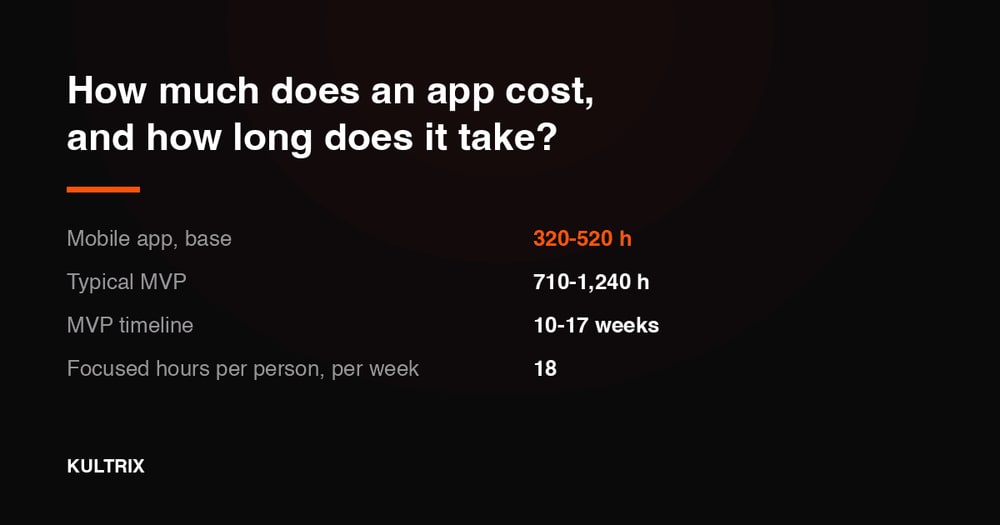
Timeline Typically 9-16 weeks

Businesses

Full App Build

Complete cycle from initial strategy and design to final launch.

What's included

  • Custom architecture & design
  • Seamless team integration
  • Production-ready release

Timeline Typically 20-40 weeks

Enterprises

Team Extension

Scale your team with expert developers to accelerate development.

What's included

  • Senior-level developers
  • Seamless team integration
  • Flexible management

Timeline Flexible / Long-term

OUR PROCESS

How We Work

We specialize in creating user-centered & innovative solutions. Delivering seamless digital experiences.

Discovery
ResearchFlow MapUser Interview
Solution
ArchitectureWireframesPrototyping
Development
Sprint CyclesCode ReviewQA Testing
Launch
DeploymentMonitoringHandoff

EXPERT INSIGHTS

Supabase vs Firebase

Supabase gives you a real PostgreSQL database with full SQL power. Firebase trades SQL for simplicity and native mobile SDKs.

Go With Supabase

  • Full PostgreSQL

    Real SQL, joins, views, RLS policies, and pgvector - not a simplified document store.

  • Open source & self-hostable

    Run on your own infrastructure - no Google dependency, GDPR-friendly.

  • Row-Level Security

    PostgreSQL RLS enforces data access rules at the database - cannot be bypassed by client.

  • Edge Functions

    Deno-based server functions co-located with your database for low-latency logic.

Go With Firebase

  • Native mobile SDKs

    Flutter, Swift, Kotlin SDKs with offline-first architecture built-in.

  • Google ecosystem

    Tight integration with Analytics, Crashlytics, and Remote Config.

  • Realtime at scale

    Proven at massive scale - millions of concurrent connections.

  • Simpler security rules

    Declarative security rules syntax familiar to frontend developers.

EXPERT GUIDANCE

Supabase Auth vs NextAuth vs Clerk

Supabase Auth

Database Integration

auth.users synced to public.users - RLS policies reference auth.uid() directly.

Pricing

Included in Supabase plan - 50K MAU free tier.

UI Components

Auth UI component library - functional but minimal styling.

OAuth Providers

20+ providers - Google, GitHub, Apple, SAML SSO.

Self-Hosting

Fully self-hostable via open-source Supabase stack.

Best For

Apps built on Supabase - seamless integration, no extra cost.

Clerk

Database Integration

Webhook syncs to DB - async, requires custom handling.

Pricing

$25+/month for production - pricing scales with MAU.

UI Components

Fully customizable prebuilt UI - fastest to a polished auth experience.

OAuth Providers

20+ providers with enterprise SSO - better B2B auth features.

Self-Hosting

Managed only - no self-hosting option.

Best For

Apps needing polished auth UI fast without building it yourself.

Figures above are indicative ranges, not a quote. Anything marked as a vendor list price is that vendor's own published price, not ours. Our own work is billed at $35/hour for design and development, $20/hour for QA and $20/hour for project management, a blended $30.5/hour, the same numbers behind the cost calculator. What a project costs on top of that depends on scope, integrations and compliance.

DELIVERABLES

What You Get

Database Schema

Database Schema

Normalised PostgreSQL schema with foreign keys, check constraints, and version-controlled migrations via Supabase CLI.

Row-Level Security

Row-Level Security

RLS policies that enforce data ownership and team membership at the database layer - not just the application layer.

Auth & Profiles

Auth & Profiles

Supabase Auth with email, social OAuth, and a custom profiles table linked to auth.users with proper triggers.

Edge Functions

Edge Functions

Deno-based Edge Functions for server-side logic: webhooks, payment handling, and third-party API integrations.

Real-Time Features

Real-Time Features

Supabase Realtime subscriptions implemented with channel management and presence support where required.

Storage Configuration

Storage Configuration

Supabase Storage buckets with access policies, image transformation setup, and signed URL patterns for private files.

INDUSTRIES

Tailored Solutions for Your Specific Industry

We build powerful digital experiences across various sectors, ensuring your product meets unique market demands.

(01)

Fintech

Data-driven commerce solutions that improve journeys, boost sales, and optimize operations.

(02)

Retail

Data-driven commerce solutions that improve journeys, increase sales, and optimize operations.

(03)

Healthcare

Reliable medical platforms that protect patient data, simplify workflows, and support clinical accuracy.

(04)

B2B SaaS

Product-driven platforms that enhance workflows, automate processes, and scale with your business.

CASE STUDIES

Our Recent Work

View All

START YOUR PROJECT

Ready to build with expert Supabase Development team?

Expert developers ready to deliver high-quality digital products.

FAQ

Frequently Asked Questions

Supabase uses PostgreSQL, which means you get full SQL - complex joins, transactions, full-text search, and a decades-long ecosystem of tooling. Firebase uses NoSQL, which is more flexible for schema-less data but loses the power of relational queries. Supabase is also open-source and self-hostable, reducing vendor lock-in. For applications with relational data, Supabase is usually the better choice; for heavily document-oriented or real-time-first workloads, Firebase can still be preferred.

Row-Level Security (RLS) is a PostgreSQL feature that restricts which rows a database user can access based on a policy. In Supabase applications the client connects directly to PostgreSQL through PostgREST, so RLS is the primary security boundary - the application layer cannot be trusted to filter data correctly for every query. We enable RLS on every table and write policies that enforce authentication and ownership before a single row is returned.

We use the Supabase CLI migration workflow: every schema change is a versioned SQL file in the migrations directory, applied in order through supabase db push. Migrations are committed to git and reviewed in pull requests. For production we apply migrations in a maintenance window or use the expand-contract pattern for zero-downtime changes on large tables.

For many applications, yes. The auto-generated REST and GraphQL APIs, combined with RLS for security and Edge Functions for custom logic, can eliminate the need for a traditional backend server. However, complex business logic, long-running processes, or heavy data processing still benefit from a dedicated server. We assess your use case and recommend the right split between Supabase-native features and a custom server layer.

Edge Functions are Deno-based serverless functions deployed to Supabase infrastructure. We use them for logic that should not run on the client: verifying webhook signatures from Stripe or GitHub, calling third-party APIs with secrets, sending transactional emails, and enforcing business rules that RLS cannot express. They run close to the user and cold-start in milliseconds.

Yes. Supabase Realtime uses PostgreSQL logical replication to broadcast row changes to subscribed clients. We implement subscriptions with channel-level filtering so clients only receive changes relevant to them. For collaborative features we also use Presence to track connected users and Broadcast for ephemeral messages that do not need to be persisted.

Supabase Auth manages the authentication lifecycle in the auth schema. We create a public profiles table that mirrors auth.users via a Postgres trigger - this is where you store display names, avatars, and custom fields. RLS policies reference auth.uid() to link data to the authenticated user. We support email/password, magic links, and social OAuth providers including Google, GitHub, and Apple.

Yes. Supabase is PostgreSQL under the hood, and PostgreSQL handles terabytes of data with proper indexing and vacuuming. For very large tables we add partitioning, and for analytical queries we can introduce a read replica or connect to a data warehouse. The Supabase Pro and Enterprise plans support larger compute instances, connection pooling via PgBouncer, and custom database configurations.

Supabase Storage provides S3-compatible object storage with access policies enforced at the bucket and object level. We set up public buckets for static assets (avatars, product images) and private buckets for user-owned documents with signed URLs for time-limited access. For image-heavy applications we configure image transformations to serve appropriately sized images without a separate CDN service.

Yes. We start by mapping your current data model to a PostgreSQL schema, configure Supabase locally, and run a test migration with sample data. For auth migration we handle the user password transition carefully - typically by requiring a password reset on first login to the new system rather than attempting to migrate hashed passwords. The cutover is done with minimal downtime using a read-replica approach.

Supabase Enterprise is used in production by companies processing millions of requests per day. It supports SOC 2 compliance, private deployments (HIPAA-eligible), SSO, and custom compute. For enterprise use cases we configure point-in-time recovery, read replicas, and network restrictions. We also set up custom domains and configure the CDN for fast global access.

We use the Supabase CLI to run a local Supabase instance in CI, allowing integration tests to run against a real PostgreSQL database with RLS enabled. We test RLS policies with different authenticated user contexts to verify ownership rules are enforced. Edge Functions are tested with Deno's built-in test runner. This gives us confidence that security policies work correctly before code reaches production.