OUR SERVICES

React Development Agency - Fast, Scalable Apps

We build production-grade React applications that perform under real-world load. Our team delivers maintainable component architecture, typed codebases with TypeScript, and optimized rendering pipelines that scale from MVP to millions of users.

Next step: get your project scoped

Tell us what you are building - what exists today, what it has to do and when it has to be live. We come back with the questions we need answered and a scoped estimate instead of a range.

Describe your project

EXPERTISE

Our Tech Stack

React
TypeScript
Redux Toolkit
Next.js
Jest
Storybook

OUR APPROACH

Flexible Engagement Models

Choose the cooperation format that best fits your business goals and development velocity.

Startups

MVP Development

Fast launch to test your idea and gather user feedback with minimal investment.

What's included

  • Core feature development
  • Basic UI/UX design
  • Stable performance

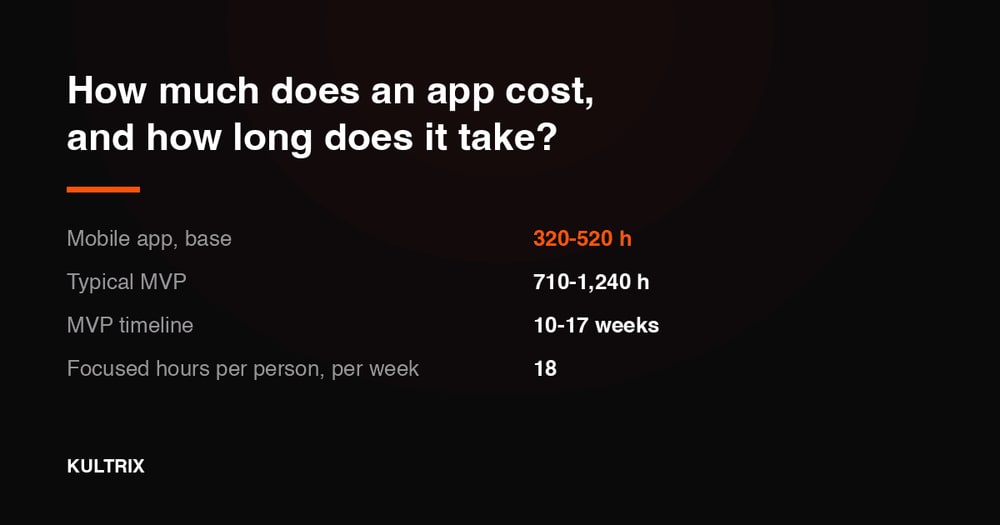
Timeline Typically 9-16 weeks

Businesses

Full App Build

Complete cycle from initial strategy and design to final launch.

What's included

  • Custom architecture & design
  • Seamless team integration
  • Production-ready release

Timeline Typically 20-40 weeks

Enterprises

Team Extension

Scale your team with expert developers to accelerate development.

What's included

  • Senior-level developers
  • Seamless team integration
  • Flexible management

Timeline Flexible / Long-term

OUR PROCESS

How We Work

We specialize in creating user-centered & innovative solutions. Delivering seamless digital experiences.

Discovery
ResearchFlow MapUser Interview
Solution
ArchitectureWireframesPrototyping
Development
Sprint CyclesCode ReviewQA Testing
Launch
DeploymentMonitoringHandoff

EXPERT INSIGHTS

Why React Over Angular for Modern UIs?

React gives teams the flexibility and ecosystem depth to build fast, maintainable interfaces that scale with product growth.

Go With React

  • Component-first model

    Build isolated, composable UI pieces that are easy to test and reuse.

  • Massive ecosystem

    Thousands of battle-tested libraries cover every UI pattern.

  • Flexible rendering

    CSR, SSR, and SSG all supported - choose per route in Next.js.

  • Huge talent pool

    More React developers available than any other frontend framework.

Go With Angular

  • Opinionated structure

    Convention over configuration keeps large enterprise teams aligned.

  • Full framework

    HTTP, forms, routing, and DI bundled out of the box.

  • TypeScript-first

    Strong typing baked in from day one.

  • Long-term Google support

    Backed by Google with a predictable LTS release cycle.

EXPERT GUIDANCE

React vs Angular

React

Learning Curve

Gentle - learn JSX and hooks, then add what you need.

Bundle Size

Small core; only ship what you import.

State Management

Context, Zustand, Redux, or Jotai - your choice.

Testing

Jest + React Testing Library, widely adopted.

SSR Support

Excellent via Next.js - production-proven at scale.

Best For

SPAs, SSR products, design-system-driven apps.

Angular

Learning Curve

Steep - decorators, modules, DI, and RxJS upfront.

Bundle Size

Larger baseline even for minimal apps.

State Management

NgRx or services; patterns are prescribed.

Testing

Jasmine + Karma built in; Cypress for E2E.

SSR Support

Angular Universal, less mature ecosystem.

Best For

Large enterprise portals with strict team conventions.

DELIVERABLES

What You Get

Component Library

Component Library

Reusable, tested React components with documented props and Storybook integration.

State Architecture

State Architecture

Scalable state management using Redux Toolkit, Zustand, or React Query depending on project needs.

TypeScript Migration

TypeScript Migration

Full TypeScript integration with strict types, interfaces, and zero implicit any.

Performance Audit

Performance Audit

React DevTools profiling, memoization, code splitting, and lazy loading for optimal render performance.

Testing Suite

Testing Suite

Unit and integration tests with Jest and React Testing Library covering critical user flows.

CI/CD Pipeline

CI/CD Pipeline

Automated build, lint, test, and deploy pipeline configured for your team workflow.

INDUSTRIES

Tailored Solutions for Your Specific Industry

We build powerful digital experiences across various sectors, ensuring your product meets unique market demands.

(01)

Fintech

Data-driven commerce solutions that improve journeys, boost sales, and optimize operations.

(02)

Retail

Data-driven commerce solutions that improve journeys, increase sales, and optimize operations.

(03)

Healthcare

Reliable medical platforms that protect patient data, simplify workflows, and support clinical accuracy.

(04)

B2B SaaS

Product-driven platforms that enhance workflows, automate processes, and scale with your business.

CASE STUDIES

Our Recent Work

View All

START YOUR PROJECT

Ready to build with expert React Development team?

Expert developers ready to deliver high-quality digital products.

FAQ

Frequently Asked Questions

React is the most widely adopted UI library, with a massive ecosystem, excellent tooling, and a component model that scales well from small apps to enterprise platforms. Its virtual DOM and one-way data flow make large codebases easier to reason about and maintain.

Yes - all new React projects at Kultrix are TypeScript-first. TypeScript catches bugs at compile time, improves IDE autocomplete, and makes refactoring much safer as your codebase grows.

If you need server-side rendering, static generation, or SEO, Next.js is the right choice. For pure client-side SPAs (dashboards, internal tools) without SEO requirements, plain React with Vite is simpler. We help you pick the right tool during scoping.

Yes. We regularly modernize legacy React codebases - converting class components to functional components with hooks, upgrading state management from Redux to Redux Toolkit or Zustand, and adopting modern patterns throughout.

It depends on the data. Server state (API data) is best managed with React Query or SWR. Global UI state works well with Zustand or Redux Toolkit. Local component state stays in useState and useReducer. We avoid over-engineering state management.

Yes. We write unit tests with Jest and integration tests with React Testing Library. We focus on testing user behavior rather than implementation details, which makes tests resilient to refactoring.

We profile with React DevTools Profiler, apply memoization (useMemo, useCallback, React.memo) where benchmarks justify it, implement route-based code splitting, optimize bundle size with tree shaking, and set up performance monitoring with Core Web Vitals tracking.

Absolutely. We regularly audit and extend existing React projects. We start with a code review, identify the highest-impact issues, and propose a prioritized improvement plan before writing a line of new code.

Yes. We build Storybook-driven component libraries with design tokens, accessible components, and documentation. This gives product teams a shared language between design and development.

We use React Hook Form for complex forms - it is performant, uncontrolled by default, and integrates cleanly with Zod for schema validation. For simple cases, controlled components with useState are sufficient.

For marketing pages and blogs, static generation (SSG) wins on performance and cost. For dashboards and authenticated apps, client-side rendering (CSR) avoids unnecessary server complexity. Next.js App Router lets us mix both per-route, which is usually the right answer.

A focused React frontend for an existing API typically takes 6-10 weeks. A full-stack React application with backend takes 3-5 months. Kultrix provides a detailed timeline with milestones after the discovery session.