OUR SERVICES

AWS Development & Architecture

AWS has 200+ services. Knowing which ones to use, and how to wire them together securely and cost-effectively, is what separates a solid AWS architecture from a sprawling bill with single points of failure.

Next step: get your project scoped

Tell us what you are building - what exists today, what it has to do and when it has to be live. We come back with the questions we need answered and a scoped estimate instead of a range.

Describe your project

EXPERTISE

Our Tech Stack

AWS Lambda
ECS
RDS
S3
CloudFront
Terraform

OUR APPROACH

Flexible Engagement Models

Choose the cooperation format that best fits your business goals and development velocity.

Startups

MVP Development

Fast launch to test your idea and gather user feedback with minimal investment.

What's included

  • Core feature development
  • Basic UI/UX design
  • Stable performance

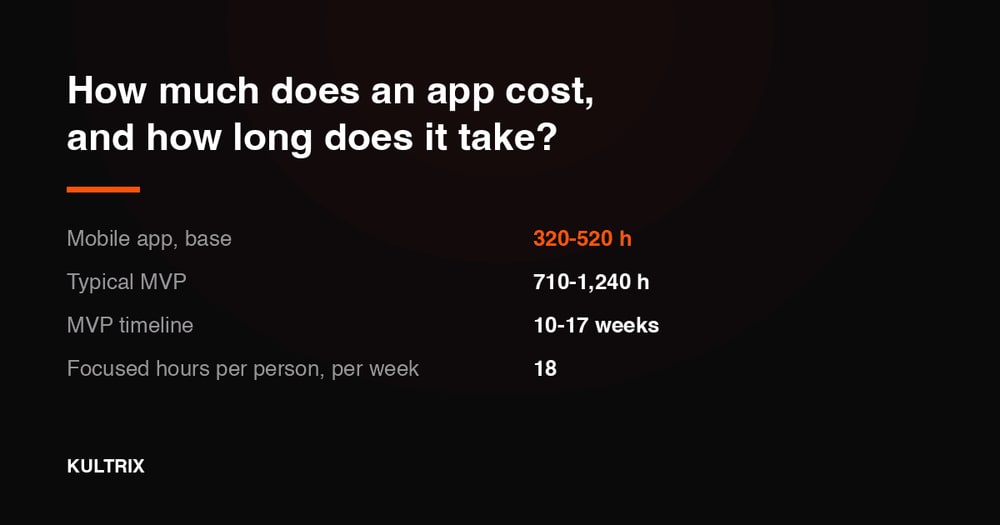
Timeline Typically 9-16 weeks

Businesses

Full App Build

Complete cycle from initial strategy and design to final launch.

What's included

  • Custom architecture & design
  • Seamless team integration
  • Production-ready release

Timeline Typically 20-40 weeks

Enterprises

Team Extension

Scale your team with expert developers to accelerate development.

What's included

  • Senior-level developers
  • Seamless team integration
  • Flexible management

Timeline Flexible / Long-term

OUR PROCESS

How We Work

We specialize in creating user-centered & innovative solutions. Delivering seamless digital experiences.

Discovery
ResearchFlow MapUser Interview
Solution
ArchitectureWireframesPrototyping
Development
Sprint CyclesCode ReviewQA Testing
Launch
DeploymentMonitoringHandoff

EXPERT INSIGHTS

Lambda Serverless vs ECS Containers

Lambda eliminates server management for event-driven workloads. ECS gives you persistent, long-running processes with full control.

Go With AWS Lambda (Serverless)

  • Zero server management

    No instances to patch, scale groups to configure, or AMIs to maintain.

  • True pay-per-use

    1M free invocations/month - idle workloads cost nothing vs idle ECS tasks.

  • Automatic scaling

    Scales from 0 to 1,000 concurrent executions in seconds without configuration.

  • Event-driven ecosystem

    Native triggers from S3, SQS, EventBridge, API Gateway, DynamoDB Streams.

Go With ECS (Fargate / EC2)

  • Long-running processes

    WebSocket servers, queue workers, and background jobs run indefinitely.

  • Full container control

    Any runtime, any binary, any memory/CPU configuration.

  • Predictable latency

    No cold starts - containers are always warm and ready.

  • Complex workloads

    Multi-container task definitions with sidecars, service mesh, and shared volumes.

EXPERT GUIDANCE

API Gateway vs Application Load Balancer

API Gateway (HTTP API)

Lambda Integration

Native Lambda proxy integration - zero glue code.

Auth & Throttling

Built-in JWT authorizers, API keys, and per-route throttling.

Cost

AWS vendor list price: $1.00 per million HTTP API requests. Cheapest at low-to-mid traffic.

WebSockets

API Gateway WebSocket API - managed persistent connections.

Custom Domains

ACM cert + custom domain in API Gateway - 5 min setup.

Best For

REST/GraphQL APIs backed by Lambda, low-to-mid traffic.

Application Load Balancer

Lambda Integration

Lambda targets supported but ALB is designed for EC2/ECS.

Auth & Throttling

Requires WAF or custom Lambda authorizers for auth.

Cost

AWS vendor list price: $0.0225 per ALB-hour. Each LCU-hour adds $0.008 at the same vendor price.

WebSockets

Full WebSocket passthrough to ECS/EC2 containers.

Custom Domains

ACM cert + Route 53 alias - same simplicity.

Best For

High-traffic apps backed by ECS/EC2, complex routing rules.

Figures above are indicative ranges, not a quote. Anything marked as a vendor list price is that vendor's own published price, not ours. Our own work is billed at $35/hour for design and development, $20/hour for QA and $20/hour for project management, a blended $30.5/hour, the same numbers behind the cost calculator. What a project costs on top of that depends on scope, integrations and compliance.

DELIVERABLES

What You Get

AWS Architecture Plan

AWS Architecture Plan

Service selection, network topology, and cost estimate reviewed before a single resource is provisioned.

IAM & Security Setup

IAM & Security Setup

Least-privilege IAM roles, SCPs for multi-account setups, CloudTrail enabled, and GuardDuty active from day one.

Compute Layer

Compute Layer

ECS Fargate, Lambda, or EC2 Auto Scaling configured for your workload with blue-green deployment support.

Data Layer

Data Layer

RDS Multi-AZ, DynamoDB, ElastiCache, or S3 configured with encryption, backups, and PITR enabled.

CDN & Edge Config

CDN & Edge Config

CloudFront distribution with custom cache behaviours, Lambda@Edge or CloudFront Functions for edge logic.

Cost Dashboard

Cost Dashboard

AWS Cost Explorer tags, budget alerts, and a Savings Plan recommendation delivered at project close.

INDUSTRIES

Tailored Solutions for Your Specific Industry

We build powerful digital experiences across various sectors, ensuring your product meets unique market demands.

(01)

Fintech

Data-driven commerce solutions that improve journeys, boost sales, and optimize operations.

(02)

Retail

Data-driven commerce solutions that improve journeys, increase sales, and optimize operations.

(03)

Healthcare

Reliable medical platforms that protect patient data, simplify workflows, and support clinical accuracy.

(04)

B2B SaaS

Product-driven platforms that enhance workflows, automate processes, and scale with your business.

CASE STUDIES

Our Recent Work

View All

START YOUR PROJECT

Ready to build with expert AWS Development team?

Expert developers ready to deliver high-quality digital products.

FAQ

Frequently Asked Questions

For compute: ECS Fargate for containerised workloads and Lambda for event-driven functions. For databases: RDS PostgreSQL and DynamoDB. For storage: S3. For networking: ALB, Route 53, and CloudFront. For messaging: SQS and SNS. We select services based on your workload characteristics, not familiarity - the goal is the simplest architecture that meets your requirements.

Lambda is ideal for event-driven workloads with unpredictable traffic - it scales to zero and costs nothing at rest. ECS Fargate is better for long-running services, workloads with predictable traffic, or applications that need persistent connections. Many production systems use both: Lambda for background jobs and ECS for the web API. We model your traffic patterns and recommend the right compute mix.

We use AWS Organizations with a root management account and separate accounts for security, shared services, and each environment (development, staging, production). Service Control Policies prevent dangerous actions like disabling CloudTrail or changing account settings. This structure provides strong isolation, cleaner cost attribution, and a blast radius limit if one account is compromised.

We tag every resource by team, environment, and product from day one, enabling cost attribution down to the feature level. We configure budget alerts to catch unexpected spend early. After 30 days of production traffic we analyse usage with Cost Explorer and recommend Reserved Instances or Savings Plans. Clients typically reduce their AWS bill by 20-35% within 90 days of a cost engagement.

Yes. We conduct reviews against all five pillars: Operational Excellence, Security, Reliability, Performance Efficiency, and Cost Optimisation. The output is a prioritised list of high, medium, and low-risk findings with concrete remediation steps. We then work through the high-priority items in subsequent sprints.

We distribute workloads across at least two Availability Zones for all stateful components. ALB health checks route traffic away from unhealthy instances automatically. RDS Multi-AZ provides synchronous replication with automatic failover. For stateless compute we use Auto Scaling Groups or ECS Service Auto Scaling to replace failed tasks without manual intervention.

Yes. We design VPC CIDR blocks that support future growth, create public and private subnets in each AZ, configure NAT Gateways for outbound private traffic, and set up VPC endpoints for S3 and DynamoDB to keep that traffic off the public internet. We document the network topology so any engineer can understand it at a glance.

Yes. We follow a structured migration approach: assess (document current state), mobilise (set up landing zone and tooling), migrate (move workloads incrementally using lift-and-shift or re-platforming), and optimise (right-size and modernise post-migration). We always run both environments in parallel during cutover and have a tested rollback plan.

All data at rest is encrypted with KMS-managed keys. Data in transit uses TLS 1.2 or higher. Sensitive parameters are stored in SSM Parameter Store or Secrets Manager. S3 buckets have public access blocked by default with bucket policies enforcing HTTPS-only access. We also enable Amazon Macie to detect unexpected exposure of sensitive data.

We configure CloudWatch metrics, log groups, and alarms for every critical service. We set up X-Ray for distributed tracing and connect it to our preferred observability platform (Datadog or Grafana). We also enable AWS Health events and Trusted Advisor checks so infrastructure issues surface before they become incidents.

Yes. We define your RTO and RPO, then select the appropriate DR strategy: backup-and-restore (lowest cost), pilot light (minimal standby), warm standby, or multi-site active-active. For most SaaS products a warm standby in a second region provides the right balance of cost and recovery speed. We test the failover procedure quarterly.

Yes. We include a structured handover covering the architecture decisions, day-to-day operational tasks, scaling runbooks, and cost management practices. We can also run workshops for your team on the services we deployed. The goal is a team that is self-sufficient, not one that needs to call us every time something changes.