OUR SERVICES

Web App Development for SaaS, Dashboards & Platforms

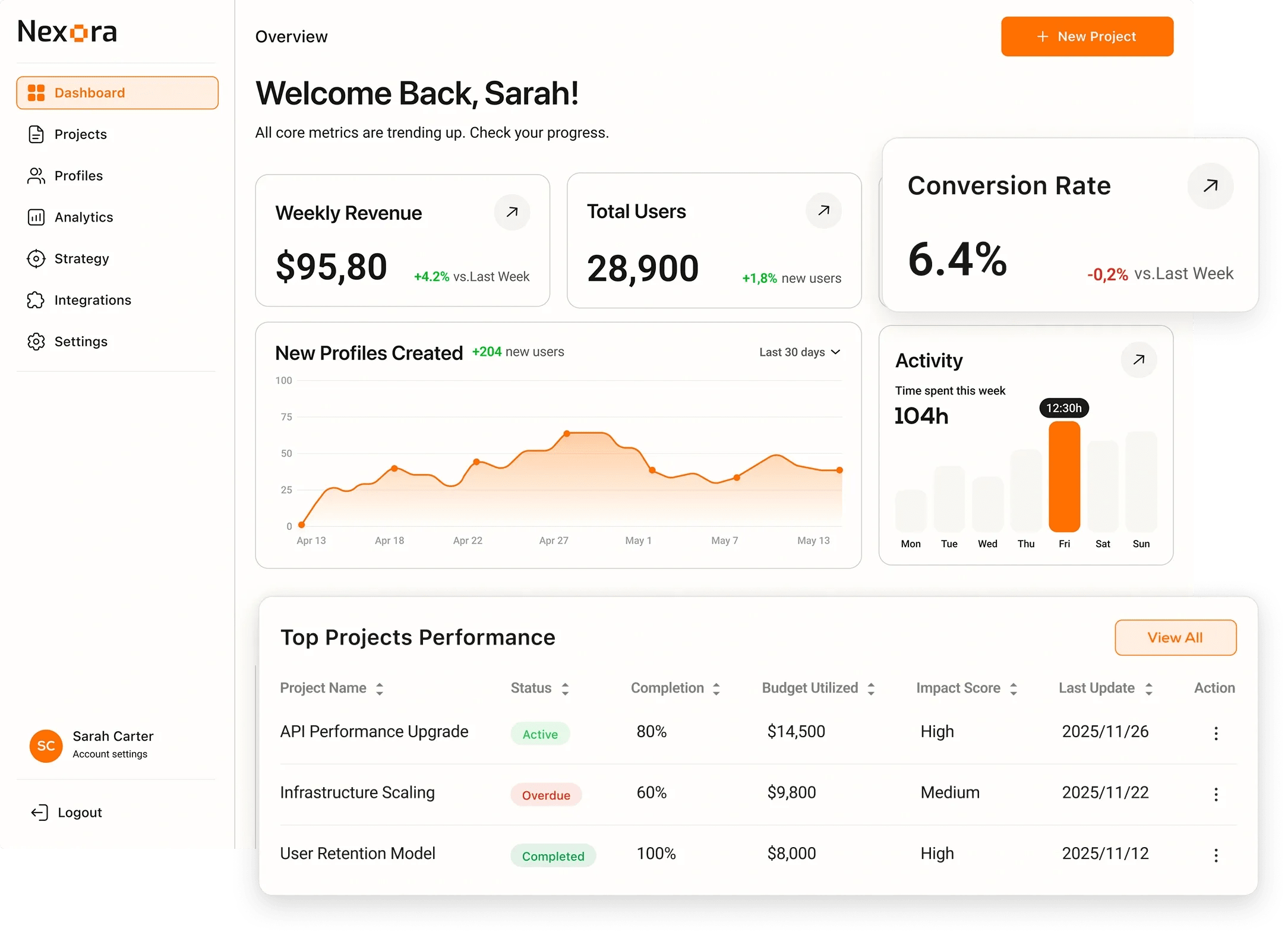
We build sophisticated web applications that handle complexity with elegance. From SaaS platforms and admin dashboards to real-time collaboration tools, our team delivers web apps that scale.

Next step: get your project scoped

Tell us what you are building - what exists today, what it has to do and when it has to be live. We come back with the questions we need answered and a scoped estimate instead of a range.

Describe your project

EXPERTISE

Our Tech Stack

React
Next.js
Node.js
PostgreSQL
Redis
WebSockets

OUR APPROACH

Flexible Engagement Models

Choose the cooperation format that best fits your business goals and development velocity.

Startups

MVP Development

Fast launch to test your idea and gather user feedback with minimal investment.

What's included

  • Core feature development
  • Basic UI/UX design
  • Stable performance

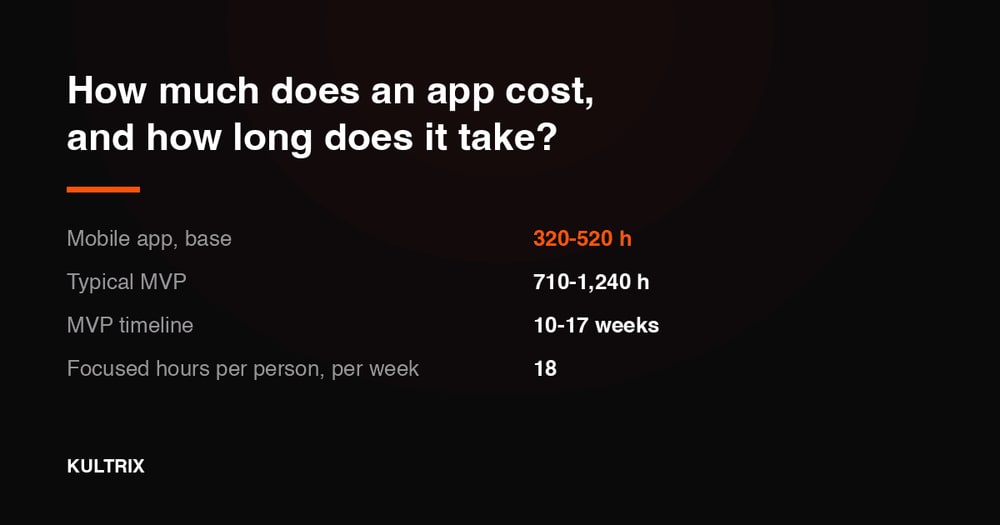
Timeline Typically 9-16 weeks

Businesses

Full App Build

Complete cycle from initial strategy and design to final launch.

What's included

  • Custom architecture & design
  • Seamless team integration
  • Production-ready release

Timeline Typically 20-40 weeks

Enterprises

Team Extension

Scale your team with expert developers to accelerate development.

What's included

  • Senior-level developers
  • Seamless team integration
  • Flexible management

Timeline Flexible / Long-term

OUR PROCESS

How We Work

We specialize in creating user-centered & innovative solutions. Delivering seamless digital experiences.

Discovery
ResearchFlow MapUser Interview
Solution
ArchitectureWireframesPrototyping
Development
Sprint CyclesCode ReviewQA Testing
Launch
DeploymentMonitoringHandoff

EXPERT INSIGHTS

Why Server-Rendered Web Apps?

Modern SSR frameworks deliver the best of both worlds - fast loads and rich interactivity.

Go With Server-Rendered (Next.js)

  • SEO-friendly by default

    Fully rendered HTML for search engine crawlers.

  • Fast initial load

    HTML streamed from server, interactive in milliseconds.

  • Reduced client JS

    Server components eliminate unnecessary JavaScript bundles.

  • Built-in API layer

    Server actions and API routes in the same project.

Go With Single Page App (SPA)

  • Seamless navigation

    No full page reloads between routes.

  • Offline capability

    Can work without network using service workers.

  • Simple deployment

    Static files on any CDN, no server required.

  • Rich interactions

    Complex client-side state management.

EXPERT GUIDANCE

Monolith vs Microservices

Monolith

Complexity

Simple - one codebase, one deployment.

Development Speed

Faster for small-medium teams (1-15 devs).

Deployment

Single deploy, instant rollback.

Scaling

Vertical scaling, simple horizontal with replicas.

Debugging

Single process, easy stack traces.

Best For

Startups, MVPs, teams under 20 developers.

Microservices

Complexity

Complex - distributed systems, service mesh.

Development Speed

Faster only with large, autonomous teams (50+ devs).

Deployment

Independent deploys, complex orchestration.

Scaling

Fine-grained scaling per service.

Debugging

Distributed tracing required, harder to debug.

Best For

Large enterprises, teams over 50 developers.

DELIVERABLES

What You Get

SaaS Platform

SaaS Platform

Multi-tenant web application with user management, billing, and subscription handling.

Admin Dashboard

Admin Dashboard

Data-rich dashboard with charts, tables, filters, and real-time updates.

Auth System

Auth System

Secure auth with SSO, OAuth, 2FA, and role-based access control.

API Layer

API Layer

Robust REST or GraphQL API with documentation and rate limiting.

Real-Time Features

Real-Time Features

WebSocket-based real-time updates, notifications, and collaborative editing.

Perf Optimization

Perf Optimization

Optimized queries, caching, lazy loading, and CDN configuration for fast load times.

INDUSTRIES

Tailored Solutions for Your Specific Industry

We build powerful digital experiences across various sectors, ensuring your product meets unique market demands.

(01)

Fintech

Data-driven commerce solutions that improve journeys, boost sales, and optimize operations.

(02)

Retail

Data-driven commerce solutions that improve journeys, increase sales, and optimize operations.

(03)

Healthcare

Reliable medical platforms that protect patient data, simplify workflows, and support clinical accuracy.

(04)

B2B SaaS

Product-driven platforms that enhance workflows, automate processes, and scale with your business.

CASE STUDIES

Our Recent Work

View All

START YOUR PROJECT

Ready to build with expert Web App Development team?

Expert developers ready to deliver high-quality digital products.

FAQ

Frequently Asked Questions

A website primarily displays information (marketing sites, blogs, portfolios). A web application is interactive - users authenticate, manage data, collaborate, and perform complex workflows (think Notion, Slack, Trello, or Stripe Dashboard). We specialize in building web applications with rich functionality and complex business logic.

We use React and Next.js for the frontend, Node.js with Express or tRPC for the backend, PostgreSQL for relational databases, Redis for caching and real-time features, and AWS or Vercel for cloud infrastructure. We deploy with CI/CD pipelines using GitHub Actions.

Yes. We have extensive experience building multi-tenant SaaS platforms with subscription billing (Stripe), user management with role-based access control, team workspaces, usage-based metering, admin dashboards, and analytics. We handle everything from architecture design to production deployment.

A simple web app takes 2-3 months. A full SaaS platform typically takes 4-8 months. Past that we stop quoting one window and phase the work instead: the largest platform we have delivered was 3,086 hours over 31 weeks with a team of five to six. Start with an MVP of the core features, launch it, and let real usage decide what comes next.

A web app with accounts, payments, a content layer and an admin panel is 750-1,340 hours, or $23,000-$41,000 at our rate card. Add the third-party systems you already pay for and it is 840-1,560 hours, or $26,000-$48,000. Everything on the module list, across web and mobile, is 2,200-4,300 hours, or $67,000-$131,000. Compliance work is 80-200 hours and each integration 70-180. Price your own scope at kultrix.com/cost-calculator.

We implement industry-standard authentication using OAuth 2.0, JWT tokens, and secure session management. We support SSO (SAML, OpenID Connect), multi-factor authentication (2FA), role-based access control (RBAC), and API rate limiting. All data is encrypted in transit (TLS) and at rest. We follow OWASP security guidelines throughout development.

Yes. We implement real-time functionality using WebSockets (Socket.io or native WS), Server-Sent Events, or polling depending on the use case. Common implementations include live notifications, collaborative editing, real-time dashboards, chat systems, and presence indicators.

Absolutely. We regularly integrate with payment processors (Stripe, PayPal), email services (SendGrid, Resend), cloud storage (AWS S3), analytics (Mixpanel, Amplitude), CRMs (HubSpot, Salesforce), and dozens of other APIs. We build robust integration layers with error handling, retry logic, and webhook processing.

For most projects, we recommend starting with a well-structured monolith. It is simpler to develop, deploy, and debug. Microservices add significant complexity (distributed systems, service mesh, inter-service communication) and are only justified for very large teams (50+ developers) or specific scaling requirements. You can always extract services later.

We optimize at every layer: database query optimization with proper indexing, Redis caching for frequently accessed data, CDN for static assets, connection pooling, lazy loading and code splitting on the frontend, efficient server-side rendering, and horizontal scaling with load balancing. We load test before launch to identify bottlenecks.

Yes. We offer maintenance packages that include bug fixes, performance monitoring, security updates, dependency upgrades, database maintenance, and feature development. Web applications require ongoing attention - new browser versions, security patches, growing data volumes, and evolving user needs all require regular maintenance.

Yes. We regularly migrate legacy applications (PHP, jQuery, Angular.js) to modern stacks (React, Next.js, Node.js). We can do incremental migration (strangler fig pattern) or full rewrites depending on codebase condition. We assess the existing system, plan the migration strategy, and execute with minimal disruption to your users.