OUR SERVICES

QA Engineering & Test Automation

Shipping without tests is borrowing against future velocity. We build the test infrastructure, automated pipelines, and QA processes that let your team deploy confidently, catching regressions in CI rather than in production where they cost ten times more to fix.

Next step: get your project scoped

Tell us what you are building - what exists today, what it has to do and when it has to be live. We come back with the questions we need answered and a scoped estimate instead of a range.

Describe your project

EXPERTISE

Our Tech Stack

Playwright
Jest
Vitest
k6
GitHub Actions
TypeScript

OUR APPROACH

Flexible Engagement Models

Choose the cooperation format that best fits your business goals and development velocity.

Startups

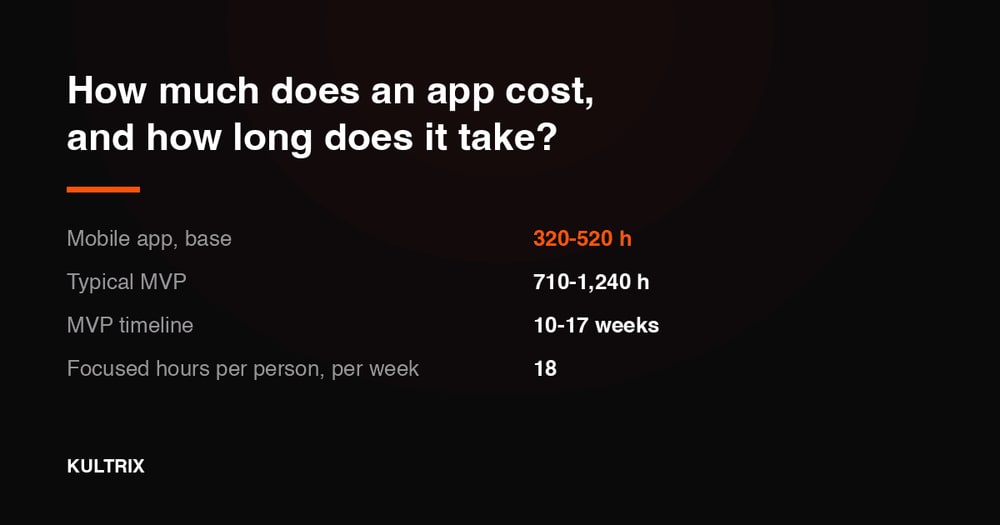
MVP Development

Fast launch to test your idea and gather user feedback with minimal investment.

What's included

  • Core feature development
  • Basic UI/UX design
  • Stable performance

Timeline Typically 9-16 weeks

Businesses

Full App Build

Complete cycle from initial strategy and design to final launch.

What's included

  • Custom architecture & design
  • Seamless team integration
  • Production-ready release

Timeline Typically 20-40 weeks

Enterprises

Team Extension

Scale your team with expert developers to accelerate development.

What's included

  • Senior-level developers
  • Seamless team integration
  • Flexible management

Timeline Flexible / Long-term

OUR PROCESS

How We Work

We specialize in creating user-centered & innovative solutions. Delivering seamless digital experiences.

Discovery
ResearchFlow MapUser Interview
Solution
ArchitectureWireframesPrototyping
Development
Sprint CyclesCode ReviewQA Testing
Launch
DeploymentMonitoringHandoff

EXPERT INSIGHTS

Automated vs Manual Testing

Automated tests catch regressions instantly. Manual testing catches usability issues and edge cases that scripts miss.

Go With Automated Testing

  • Instant regression detection

    Every PR runs the full suite - bugs caught before reaching staging.

  • Scales with codebase

    10,000+ tests run in 5 minutes on CI - impossible to match manually.

  • Consistent coverage

    Same cases run identically every time - no human fatigue or missed steps.

  • Living documentation

    Tests describe expected behavior - new developers read tests to understand the system.

Go With Manual Testing

  • Catches UX issues

    Human testers notice confusing flows that scripts never detect.

  • Exploratory testing

    Ad-hoc investigation uncovers unexpected behavior in edge cases.

  • No setup required

    Start testing immediately - no test framework to configure.

  • Visual regression

    Human eyes notice layout shifts and pixel imperfections.

EXPERT GUIDANCE

Unit Tests vs E2E Tests

Unit + Integration Tests (Vitest)

Execution Speed

10,000 unit tests in <10 seconds - instant feedback loop.

Failure Isolation

Failed test pinpoints exact function or module.

Flakiness

Deterministic - same input always produces same output.

User Confidence

Validates logic but not the full user journey.

Maintenance Cost

Low - unit tests closely follow code structure.

Best For

Business logic, utilities, API handlers, data transformations.

E2E Tests Only (Playwright)

Execution Speed

E2E suite: 5-30 minutes for 200 tests with browser spin-up.

Failure Isolation

E2E failure requires investigation to find root cause.

Flakiness

Network, timing, and animation issues cause flaky failures.

User Confidence

Validates real browser behavior - highest confidence before deploy.

Maintenance Cost

High - UI changes break selectors, pages update frequently.

Best For

Critical user paths - checkout, signup, login, core workflows.

DELIVERABLES

What You Get

Test Strategy Doc

Test Strategy Doc

Coverage targets, test types by layer, tooling choices, and the definition of "done" for quality - all agreed before writing a single test.

Unit Test Suite

Unit Test Suite

Jest or Vitest unit tests covering business logic, utility functions, and component behaviour with meaningful coverage of critical paths.

Integration Tests

Integration Tests

Tests that verify API endpoints, database interactions, and service-to-service contracts against real dependencies in a CI environment.

E2E Test Suite

E2E Test Suite

Playwright browser tests covering critical user journeys - sign-up, checkout, core workflows - run on every pull request.

CI Test Pipeline

CI Test Pipeline

Tests parallelised and cached in GitHub Actions or GitLab CI, with flaky test detection and a failure notification workflow.

Load Test Scenarios

Load Test Scenarios

k6 scripts simulating realistic user traffic with latency and error rate baselines documented for each critical endpoint.

INDUSTRIES

Tailored Solutions for Your Specific Industry

We build powerful digital experiences across various sectors, ensuring your product meets unique market demands.

(01)

Fintech

Data-driven commerce solutions that improve journeys, boost sales, and optimize operations.

(02)

Retail

Data-driven commerce solutions that improve journeys, increase sales, and optimize operations.

(03)

Healthcare

Reliable medical platforms that protect patient data, simplify workflows, and support clinical accuracy.

(04)

B2B SaaS

Product-driven platforms that enhance workflows, automate processes, and scale with your business.

CASE STUDIES

Our Recent Work

View All

START YOUR PROJECT

Ready to build with expert QA & Testing team?

Expert developers ready to deliver high-quality digital products.

FAQ

Frequently Asked Questions

The testing pyramid is a useful guide: many fast unit tests at the base (business logic, utilities), fewer integration tests in the middle (API endpoints, database interactions), and a small number of end-to-end tests at the top (critical user journeys). Each layer has different speed, cost, and feedback granularity tradeoffs. We design the right mix based on your application type - a data-heavy API needs more integration tests; a complex UI needs more E2E coverage.

We prioritise by risk: the highest-value user flows (sign-up, checkout, core feature usage), the most frequently changed code paths, and the areas with the highest historical bug rate. Chasing 100% code coverage is usually the wrong goal - we focus on meaningful coverage of the paths that matter most and build from there. An imperfect test suite that catches 70% of bugs and runs in 3 minutes is better than a perfect suite nobody runs because it takes 40 minutes.

Unit tests verify a single function or component in isolation, with dependencies mocked. They are fast (milliseconds) and great for business logic. Integration tests verify multiple components working together - an API endpoint calling a real database, for example. They are slower but catch interface mismatches. End-to-end tests drive a real browser through user flows and catch issues that only appear when the entire stack is assembled. We use all three layers strategically.

Flaky tests - tests that pass and fail non-deterministically - erode trust in the test suite faster than almost anything else. We prevent flakiness by avoiding arbitrary sleep() calls (using explicit wait conditions instead), cleaning up test data between runs, avoiding shared state, and using deterministic test data. When a flaky test appears in CI we quarantine it immediately, fix the root cause, and track flakiness metrics over time.

We use Playwright as our default E2E tool. It supports Chromium, Firefox, and WebKit, has excellent TypeScript support, built-in test retry, trace recording for debugging failures, and a visual UI mode. It is also significantly faster and more reliable than Cypress for most workloads. We use Cypress when a project already has a mature Cypress suite - migration is not worth the disruption.

Tests run on every pull request in GitHub Actions or GitLab CI. We parallelise slow test suites across multiple workers to keep feedback fast (under 5 minutes for most suites). We cache node_modules and Playwright browser binaries between runs. Failed tests block the merge. We also set up test result summaries that show which tests failed and why without requiring engineers to dig through logs.

We write integration tests that send HTTP requests to the API against a real database and verify response schemas, status codes, authentication enforcement, and edge cases. We use supertest for Express/Node APIs and the built-in Next.js test utilities for Next.js API routes. For public APIs we also write contract tests using Pact to ensure consumer expectations are not broken by provider changes.

Yes. We start by auditing the existing code to identify the highest-risk areas - most changed, most business-critical, most bug-prone. We add tests incrementally, prioritising integration and E2E tests for critical flows first (these give the fastest return on investment) and unit tests for complex business logic. We avoid the trap of writing tests just to hit a coverage number and focus on tests that would catch real bugs.

We run integration tests against a real database - either a Dockerised PostgreSQL instance in CI or the Supabase/Firebase local emulator. Test data is inserted as part of the test setup and cleaned up afterwards. We test not only happy paths but also constraint violations, race conditions for concurrent writes, and transaction rollback behaviour. Running against a real database catches issues that in-memory mocks miss.

We use factory functions (with a library like Fishery or Faker) to generate realistic test data programmatically, avoiding fixed fixtures that become stale. For integration tests each test creates its own isolated data set and cleans up after itself. We never share mutable state between tests. For E2E tests we seed a known starting state before each test run using a database migration or API call.

Yes. Automated tests are excellent at regression prevention but miss visual regressions, usability issues, and unexpected behaviour on specific devices or browsers. We perform exploratory manual QA before major releases - structured test sessions where a QA engineer actively tries to break the application. We document findings, triage by severity, and track fixes before sign-off.

We track several metrics: coverage percentage on business-critical modules, flaky test rate (tests that fail non-deterministically), mean time to detect a regression (how quickly tests catch a bug after it is introduced), and CI pipeline duration. We review these in monthly retainer reports and adjust the test strategy when coverage gaps or slowdowns emerge. A healthy test suite is an investment that compounds - each added test makes future development safer.