OUR SERVICES

Application & Infrastructure Migration

Migrations are high-stakes work. A poorly planned cutover means downtime, data loss, or months of running two systems in parallel.

Next step: get your project scoped

Tell us what you are building - what exists today, what it has to do and when it has to be live. We come back with the questions we need answered and a scoped estimate instead of a range.

Describe your project

EXPERTISE

Our Tech Stack

PostgreSQL
AWS
Terraform
Docker
Next.js
Node.js

OUR APPROACH

Flexible Engagement Models

Choose the cooperation format that best fits your business goals and development velocity.

Startups

MVP Development

Fast launch to test your idea and gather user feedback with minimal investment.

What's included

  • Core feature development
  • Basic UI/UX design
  • Stable performance

Timeline Typically 9-16 weeks

Businesses

Full App Build

Complete cycle from initial strategy and design to final launch.

What's included

  • Custom architecture & design
  • Seamless team integration
  • Production-ready release

Timeline Typically 20-40 weeks

Enterprises

Team Extension

Scale your team with expert developers to accelerate development.

What's included

  • Senior-level developers
  • Seamless team integration
  • Flexible management

Timeline Flexible / Long-term

OUR PROCESS

How We Work

We specialize in creating user-centered & innovative solutions. Delivering seamless digital experiences.

Discovery
ResearchFlow MapUser Interview
Solution
ArchitectureWireframesPrototyping
Development
Sprint CyclesCode ReviewQA Testing
Launch
DeploymentMonitoringHandoff

EXPERT INSIGHTS

Big Bang vs Incremental Migration

Big Bang migrations are fast but risky. Incremental migrations take longer but let you validate each step in production.

Go With Incremental Migration (Strangler Fig)

  • Zero downtime

    Traffic is routed progressively to the new system while the old one stays live.

  • Early production validation

    Each migrated module is tested by real users before full cutover.

  • Easy rollback

    Route traffic back to the legacy system instantly if issues arise.

  • Lower risk

    Scope of each release is small - bugs are isolated and easier to fix.

Go With Big Bang Migration

  • Fastest total completion

    One release replaces everything - no dual-running systems.

  • Simpler data model transition

    One-time schema transformation - no compatibility shims needed.

  • No dual maintenance

    Legacy system is decommissioned immediately after cutover.

  • Clear milestone

    Single go-live date for stakeholder communication.

EXPERT GUIDANCE

Database Migration: Expand-Contract vs Direct

Expand-Contract (Blue-Green Schema)

Downtime

Zero - old and new columns coexist during transition.

Rollback

Keep old column - roll back by switching code to read old column.

Complexity

Three phases: expand, migrate data, contract - more steps.

Data Volume

Backfill can run in background batches without locking.

CI/CD Integration

Each phase deploys independently - fits trunk-based development.

Best For

High-traffic production tables, rename/restructure operations.

Direct Schema Migration

Downtime

Requires maintenance window for large table ALTER TABLE operations.

Rollback

Rollback requires reverting schema - risky with live writes.

Complexity

Single migration file - straightforward for small tables.

Data Volume

Large backfills lock the table - causes downtime.

CI/CD Integration

Migration tied to code deploy - must coordinate carefully.

Best For

New tables, small reference data, greenfield schemas.

DELIVERABLES

What You Get

Migration Assessment

Migration Assessment

Inventory of all components, dependencies, and data to be migrated, with a risk-rated plan and rollback strategy.

Data Migration Scripts

Data Migration Scripts

Tested ETL scripts that transform and transfer data with row-count and integrity verification at every stage.

Parallel Run Setup

Parallel Run Setup

Both old and new systems running simultaneously during a validation window so you can verify correctness before cutting over.

Cutover Runbook

Cutover Runbook

Step-by-step cutover procedure with go/no-go checkpoints, DNS TTL management, and a rollback trigger condition.

Migration Validation

Migration Validation

Automated and manual verification of data integrity, application functionality, and performance in the new environment.

Decommission Plan

Decommission Plan

Scheduled shutdown of the old system with data archival and cost cleanup after the stabilisation period.

INDUSTRIES

Tailored Solutions for Your Specific Industry

We build powerful digital experiences across various sectors, ensuring your product meets unique market demands.

(01)

Fintech

Data-driven commerce solutions that improve journeys, boost sales, and optimize operations.

(02)

Retail

Data-driven commerce solutions that improve journeys, increase sales, and optimize operations.

(03)

Healthcare

Reliable medical platforms that protect patient data, simplify workflows, and support clinical accuracy.

(04)

B2B SaaS

Product-driven platforms that enhance workflows, automate processes, and scale with your business.

CASE STUDIES

Our Recent Work

View All

START YOUR PROJECT

Ready to build with expert Migration Services team?

Expert developers ready to deliver high-quality digital products.

FAQ

Frequently Asked Questions

We handle database migrations (MySQL to PostgreSQL, MongoDB to Supabase, Firestore to PostgreSQL), cloud migrations (bare-metal or Heroku to AWS/GCP/Azure), framework migrations (PHP or Ruby on Rails to Next.js, REST to GraphQL), and infrastructure migrations (manual deploys to Kubernetes, Terraform-managed environments). Each migration type has its own risks and techniques - we apply the right approach for the specific transition.

The core technique is running old and new systems in parallel during a validation window. For database migrations we use change data capture (CDC) or dual-write patterns to keep both databases in sync during this period, allowing an instant rollback if something goes wrong. DNS-level cutover with a short TTL and a tested rollback plan means the actual downtime window for most migrations is under 5 minutes.

Before, during, and after migration we run integrity checks: row counts by table, hash verification of critical records, and referential integrity tests for foreign key relationships. For large datasets we migrate in batches and verify each batch before proceeding. We never truncate or drop the source database until integrity checks in the target have passed and the application has been validated in production.

Every migration plan includes a specific rollback trigger condition (e.g. error rate above 1% or data validation fails) and a time-boxed rollback decision (e.g. if not confirmed stable within 30 minutes, roll back automatically). Rollback means pointing traffic back to the old system - which is still running and in sync. We do not cut the cord on the source until the new system has been stable for an agreed period.

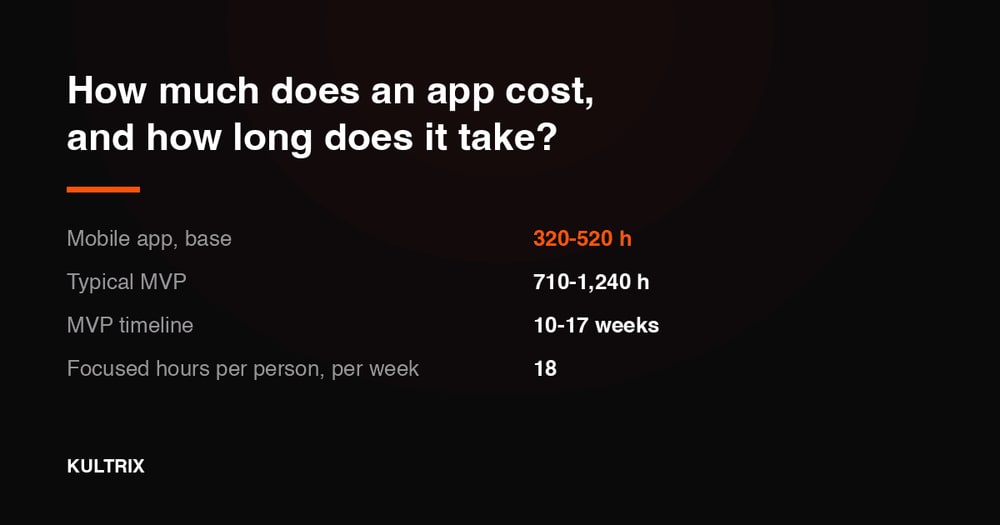
Data migration from an existing system is a module in our estimate at 70-170 hours, and a small migration - one service, or a database under ten gigabytes - lands there once planning, testing and cutover are counted. Large or complex migrations, multi-service, terabyte-scale, with compliance obligations, take 2-4 months. We never rush validation: it is where most migration failures originate. You get a dated plan after the assessment phase.

We use a strangler-fig pattern: rather than rewriting the entire application at once, we route individual features or endpoints to the new system progressively. Traffic starts at 0% on the new system, increases as confidence grows, and reaches 100% only after all features have been validated. The old system is kept alive until the new one is fully stable. This approach eliminates the risk of a big-bang cutover.

Yes, with care. User data migration requires handling PII compliantly (GDPR/CCPA), and password migration is particularly sensitive because hashed passwords cannot always be transferred between systems using different hashing algorithms. We implement forced password resets on first login when hash migration is not possible, communicate clearly with users, and ensure the experience is smooth even for users who have not logged in for months.

Yes - this is one of our most common migration types. We move Heroku apps to Railway, Render, Fly.io, or AWS depending on your requirements and budget. The migration includes containerising the application, porting Heroku-specific add-ons (Postgres, Redis, Sendgrid) to equivalent services, and setting up CI/CD pipelines equivalent to the Heroku git-push workflow your team is used to.

Schema migrations between different database engines (e.g. MySQL to PostgreSQL) require data type mapping, constraint re-expression, and sometimes stored procedure rewrites. We produce a schema mapping document, generate the target DDL, run a test migration with production data on a staging environment, and validate that the application works correctly against the new schema before scheduling the production cutover.

SEO is a first-class concern in any site migration. We implement 301 redirects for all changed URLs, preserve the sitemap, transfer structured data markup, monitor Google Search Console for crawl errors post-migration, and set canonical URLs correctly. We track organic traffic and rankings during the stabilisation period and respond quickly to any unexpected drops.

Secrets are never copied into migration scripts or stored in version control. We use a secrets manager (AWS Secrets Manager, Vault, Doppler) to inject credentials at runtime during both the parallel-run period and post-cutover. We also audit the old system for hard-coded credentials before decommissioning - it is common to find credentials that were never rotated and should be invalidated before the old system goes dark.

Yes. We stay engaged for a stabilisation period after cutover - typically 2-4 weeks - monitoring for issues, responding to incidents, and fine-tuning performance in the new environment. We also deliver a migration retrospective document covering what went well, what was difficult, and any technical debt inherited by the new system. After stabilisation we hand over to your team or transition to a maintenance retainer.