OUR SERVICES

GraphQL Development Agency - Flexible Data APIs

We design GraphQL APIs that eliminate over-fetching, enable rapid frontend iteration, and scale under production load.

Next step: get your project scoped

Tell us what you are building - what exists today, what it has to do and when it has to be live. We come back with the questions we need answered and a scoped estimate instead of a range.

Describe your project

EXPERTISE

Our Tech Stack

GraphQL
Apollo Server
TypeScript
Pothos
Prisma
DataLoader

OUR APPROACH

Flexible Engagement Models

Choose the cooperation format that best fits your business goals and development velocity.

Startups

MVP Development

Fast launch to test your idea and gather user feedback with minimal investment.

What's included

  • Core feature development
  • Basic UI/UX design
  • Stable performance

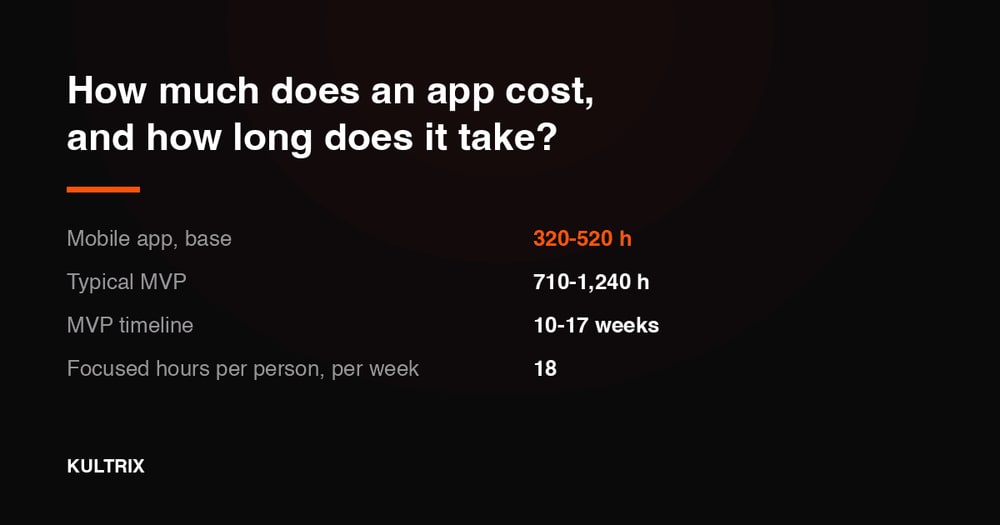
Timeline Typically 9-16 weeks

Businesses

Full App Build

Complete cycle from initial strategy and design to final launch.

What's included

  • Custom architecture & design
  • Seamless team integration
  • Production-ready release

Timeline Typically 20-40 weeks

Enterprises

Team Extension

Scale your team with expert developers to accelerate development.

What's included

  • Senior-level developers
  • Seamless team integration
  • Flexible management

Timeline Flexible / Long-term

OUR PROCESS

How We Work

We specialize in creating user-centered & innovative solutions. Delivering seamless digital experiences.

Discovery
ResearchFlow MapUser Interview
Solution
ArchitectureWireframesPrototyping
Development
Sprint CyclesCode ReviewQA Testing
Launch
DeploymentMonitoringHandoff

EXPERT INSIGHTS

GraphQL vs REST for Modern APIs

GraphQL lets clients request exactly the data they need, eliminating over-fetching and enabling rapid frontend iteration without backend changes.

Go With GraphQL

  • Precise data fetching

    Clients declare their exact data requirements - no over or under-fetching.

  • Single endpoint

    One /graphql endpoint replaces dozens of versioned REST routes.

  • Strong type system

    Schema is the contract - client and server types stay in sync.

  • Introspection

    Clients can discover the full API from the schema at runtime.

Go With REST

  • Universal tooling

    Every HTTP client, browser, and proxy understands REST.

  • HTTP caching

    GET responses cache at the browser and CDN layer naturally.

  • Simpler to start

    No schema definition language or resolver architecture needed.

  • Broad ecosystem

    OpenAPI spec, Swagger UI, and code generators are mature.

EXPERT GUIDANCE

GraphQL vs REST

GraphQL

Data Efficiency

Request exactly the fields you need - nothing more.

Versioning

Evolve schema with deprecations - no /v2 routes needed.

Caching

Requires persisted queries or Apollo Client caching.

Learning Curve

Schema SDL, resolvers, and dataloader pattern to learn.

Real-time

Subscriptions built into the spec.

Best For

Complex data graphs, mobile apps, rapid frontend iteration.

REST

Data Efficiency

Fixed response shape; often returns unused fields.

Versioning

New versions require new endpoints or major version bumps.

Caching

Native HTTP caching at CDN and browser level.

Learning Curve

Standard HTTP verbs - familiar to every developer.

Real-time

Requires SSE or WebSocket alongside REST API.

Best For

Simple CRUD APIs, public APIs, high-cache-hit scenarios.

DELIVERABLES

What You Get

Schema Design

Schema Design

Well-modeled GraphQL schema with types, queries, mutations, and subscriptions.

Resolver Layer

Resolver Layer

Efficient resolvers with DataLoader batch loading to eliminate N+1 query problems.

Type Generation

Type Generation

GraphQL Code Generator producing TypeScript types for frontend queries and mutations.

Auth & Permissions

Auth & Permissions

Field-level and type-level authorization using directive-based or plugin-based guards.

Subscriptions

Subscriptions

Real-time GraphQL subscriptions via WebSockets for live data feeds and notifications.

Performance Tooling

Performance Tooling

Query complexity limits, depth limits, persisted queries, and response caching.

INDUSTRIES

Tailored Solutions for Your Specific Industry

We build powerful digital experiences across various sectors, ensuring your product meets unique market demands.

(01)

Fintech

Data-driven commerce solutions that improve journeys, boost sales, and optimize operations.

(02)

Retail

Data-driven commerce solutions that improve journeys, increase sales, and optimize operations.

(03)

Healthcare

Reliable medical platforms that protect patient data, simplify workflows, and support clinical accuracy.

(04)

B2B SaaS

Product-driven platforms that enhance workflows, automate processes, and scale with your business.

CASE STUDIES

Our Recent Work

View All

START YOUR PROJECT

Ready to build with expert GraphQL Development team?

Expert developers ready to deliver high-quality digital products.

FAQ

Frequently Asked Questions

GraphQL is a query language for APIs that lets clients request exactly the fields they need. It is ideal when multiple clients (web, mobile, third parties) consume the same API with different data needs, or when rapid frontend iteration is a priority. REST is simpler for straightforward CRUD APIs with predictable shapes.

Neither is universally better. GraphQL shines for complex, interconnected data with multiple consumers. REST is simpler to implement, cache, and debug for straightforward resource-based APIs. Kultrix evaluates your specific use case and recommends the appropriate approach - or a hybrid.

We use GraphQL Yoga (from The Guild) for new projects - it is framework-agnostic, standards-compliant, and supports subscriptions and file uploads out of the box. For Apollo-invested codebases, we work with Apollo Server 4. Pothos is our schema builder for code-first type-safe schemas.

The N+1 problem occurs when a GraphQL resolver fetches related data with one database query per parent item - for 100 articles each loading an author, that is 101 queries. We solve this with DataLoader, which batches and deduplicates database calls, collapsing N+1 into a single efficient query.

We prefer code-first with Pothos - schemas are defined in TypeScript, giving you compile-time type safety between resolvers and the schema. Schema-first (SDL-first) requires keeping schema and resolver types in sync manually, which creates drift in larger codebases.

We use GraphQL Code Generator to produce TypeScript types from the schema and client-side query documents. This means every React component that runs a query gets fully typed result objects - no manual interface maintenance when the schema changes.

We implement authentication via JWT, field-level authorization guards, query depth and complexity limits to prevent abuse, disabled introspection in production, persisted queries to whitelist allowed operations, and rate limiting at the HTTP layer.

GraphQL subscriptions use WebSockets (or Server-Sent Events) to push updates from server to client when data changes. We implement subscriptions with graphql-ws and PubSub (backed by Redis for multi-instance deployments) for chat, live dashboards, and collaborative features.

Yes. GraphQL can sit as a layer in front of REST APIs, databases, and third-party services - aggregating them into a single schema. This is common for migrating from REST gradually or unifying multiple microservices behind one API gateway.

We use persisted queries to enable HTTP GET-based caching at the CDN level, implement response caching with @cacheControl directives for public data, and use DataLoader caching within a single request to prevent redundant database fetches.

Yes. Prisma and GraphQL are a natural pairing - Prisma's type-safe query client produces results that map directly to GraphQL types. With Pothos + Prisma plugin, we generate GraphQL types directly from the Prisma schema with minimal boilerplate.

A GraphQL API for an existing data model takes 4-8 weeks including schema design, resolvers, type generation, and auth. A complete backend with GraphQL, database, and real-time subscriptions takes 2-4 months. Kultrix scopes GraphQL projects with schema design as the first milestone.