OUR SERVICES

Go Development Agency - Scalable Backends & APIs

We build Go services that handle high concurrency with simplicity. Kultrix delivers Go backends, microservices, and CLI tools that compile to single binaries, start in milliseconds, and scale horizontally with minimal operational overhead.

Next step: get your project scoped

Tell us what you are building - what exists today, what it has to do and when it has to be live. We come back with the questions we need answered and a scoped estimate instead of a range.

Describe your project

EXPERTISE

Our Tech Stack

Go
Gin
GORM
PostgreSQL
Docker
gRPC

OUR APPROACH

Flexible Engagement Models

Choose the cooperation format that best fits your business goals and development velocity.

Startups

MVP Development

Fast launch to test your idea and gather user feedback with minimal investment.

What's included

  • Core feature development
  • Basic UI/UX design
  • Stable performance

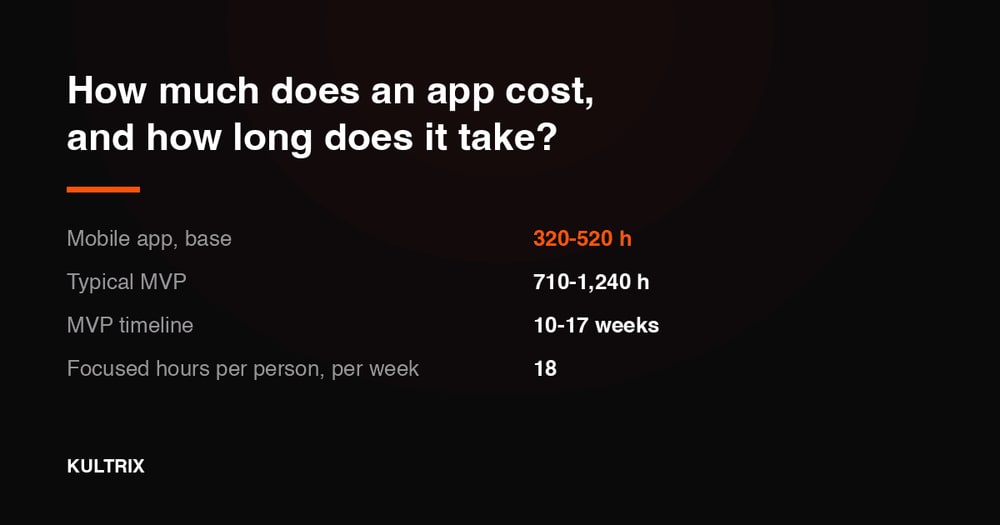
Timeline Typically 9-16 weeks

Businesses

Full App Build

Complete cycle from initial strategy and design to final launch.

What's included

  • Custom architecture & design
  • Seamless team integration
  • Production-ready release

Timeline Typically 20-40 weeks

Enterprises

Team Extension

Scale your team with expert developers to accelerate development.

What's included

  • Senior-level developers
  • Seamless team integration
  • Flexible management

Timeline Flexible / Long-term

OUR PROCESS

How We Work

We specialize in creating user-centered & innovative solutions. Delivering seamless digital experiences.

Discovery
ResearchFlow MapUser Interview
Solution
ArchitectureWireframesPrototyping
Development
Sprint CyclesCode ReviewQA Testing
Launch
DeploymentMonitoringHandoff

EXPERT INSIGHTS

Why Go Over Java/Spring for New Services?

Go delivers Java-level reliability with a fraction of the operational complexity - tiny binaries, fast starts, and simple concurrency.

Go With Go

  • Instant startup

    Binaries start in milliseconds - ideal for containers and serverless.

  • Native concurrency

    Goroutines and channels handle thousands of concurrent operations cheaply.

  • Minimal deployment footprint

    Single static binary - no JVM, no classpath, no runtime to install.

  • Readable codebase

    Explicit, minimal syntax keeps large teams aligned without convention wars.

Go With Java / Spring

  • Enterprise ecosystem

    Decades of battle-tested libraries for every integration pattern.

  • Spring Boot conventions

    Auto-configuration, dependency injection, and actuators out of the box.

  • JVM optimisation

    JIT compiler achieves peak throughput after warm-up.

  • Massive talent pool

    Most enterprise engineers already know Java.

EXPERT GUIDANCE

Go vs Java/Spring

Go

Startup Time

Milliseconds - excellent for containers and FaaS.

Memory Usage

Low - binaries typically use 10-50 MB at idle.

Concurrency Model

Goroutines - lightweight, cheap, and idiomatic.

Dependency Injection

Manual wiring or lightweight libs (dig, wire).

Error Handling

Explicit error return values - verbose but traceable.

Best For

Microservices, CLI tools, cloud-native services, DevOps.

Java / Spring Boot

Startup Time

Seconds for JVM warm-up - unsuitable for rapid scale-out.

Memory Usage

High - JVM heap overhead from hundreds of MB.

Concurrency Model

Thread pools and reactive streams (Project Reactor/WebFlux).

Dependency Injection

Spring IoC container - powerful but opaque.

Error Handling

Exception-based - easier to write, harder to trace.

Best For

Enterprise monoliths, financial systems, existing Java orgs.

DELIVERABLES

What You Get

Go REST API

Go REST API

High-throughput HTTP API with Gin, middleware stack, and structured error responses.

gRPC Service

gRPC Service

Protobuf-defined gRPC service for efficient inter-service communication.

Concurrent Worker

Concurrent Worker

Goroutine-based background worker with graceful shutdown and job queue integration.

Docker Binary

Docker Binary

Multi-stage Docker build producing a minimal ~10MB Go service image.

Database Layer

Database Layer

GORM or sqlc data layer with migrations, connection pooling, and typed queries.

Observability

Observability

Structured logging with zap, Prometheus metrics, and distributed tracing with OpenTelemetry.

INDUSTRIES

Tailored Solutions for Your Specific Industry

We build powerful digital experiences across various sectors, ensuring your product meets unique market demands.

(01)

Fintech

Data-driven commerce solutions that improve journeys, boost sales, and optimize operations.

(02)

Retail

Data-driven commerce solutions that improve journeys, increase sales, and optimize operations.

(03)

Healthcare

Reliable medical platforms that protect patient data, simplify workflows, and support clinical accuracy.

(04)

B2B SaaS

Product-driven platforms that enhance workflows, automate processes, and scale with your business.

CASE STUDIES

Our Recent Work

View All

START YOUR PROJECT

Ready to build with expert Go Development team?

Expert developers ready to deliver high-quality digital products.

FAQ

Frequently Asked Questions

Go compiles to a single static binary with no runtime dependencies, starts in milliseconds, and handles high concurrency natively through goroutines and channels. Its simplicity, fast compilation, and excellent standard library make it highly productive for backend teams.

Go is the practical choice for teams wanting near-C performance with much shorter development cycles than Rust, and better throughput than Node.js for CPU and I/O-bound microservices. Node.js is easier to hire for and shares code with JavaScript frontends. Rust is better when memory safety guarantees are critical.

We use Gin for most API projects - it is fast, mature, and has excellent middleware support. For simpler services or projects requiring net/http compatibility, we build directly on the standard library with chi for routing. For microservices communicating internally, we prefer gRPC.

Go uses goroutines - lightweight threads managed by the Go runtime, not the OS. Thousands of goroutines can run concurrently on a handful of OS threads. Channels provide safe communication between goroutines. This model makes concurrent code readable without callback hell or async/await overhead.

Yes. gRPC is our preferred protocol for internal microservice communication in Go - protobuf encoding is 3-10x smaller than JSON, strong typing via generated code, built-in deadlines and cancellation, and streaming support. We define proto files as the API contract between services.

We use sqlc for compile-time SQL query validation with generated Go types - it reads your SQL queries and generates fully typed Go code. For projects preferring an ORM, GORM works well. We run migrations with golang-migrate and use pgxpool for PostgreSQL connection pooling.

Go has excellent built-in testing with the testing package. We write table-driven unit tests, use testcontainers-go for integration tests against a real PostgreSQL instance in Docker, and testify for assertions. We target 80%+ coverage on business logic packages.

A typical Go service compiles to a 10-20MB statically linked binary with no external dependencies. Combined with a minimal base image (scratch or distroless), the resulting Docker image is 10-30MB - dramatically smaller than Node.js or Python equivalents.

Go services routinely handle tens of thousands of requests per second on modest hardware. The Go HTTP server is production-ready without a reverse proxy, and goroutines enable handling thousands of concurrent connections with predictable latency under load.

Yes. Go's single-binary compilation makes it ideal for CLI tools - users download one file, no runtime installation needed. We use Cobra for command structure and Viper for configuration. Kultrix has built deployment tools, data migration CLIs, and developer tooling in Go.

Go uses explicit error returns rather than exceptions. We define domain-specific error types with errors.As/errors.Is for structured handling, wrap errors with context using fmt.Errorf and %w, and centralize HTTP error serialization in middleware to keep handler code clean.

A Go microservice or API takes 4-8 weeks. A full backend platform with multiple Go services takes 2-4 months. Go's simplicity and fast compilation make iteration quick. Kultrix delivers Go projects with comprehensive tests and documented deployment procedures.