OUR SERVICES

Angular Development Agency - Enterprise Web Apps

We build large-scale Angular applications that enterprise teams can maintain and extend for years. Kultrix brings structured module architecture, reactive RxJS patterns, and strict TypeScript to Angular projects that need to scale across multiple teams.

Next step: get your project scoped

Tell us what you are building - what exists today, what it has to do and when it has to be live. We come back with the questions we need answered and a scoped estimate instead of a range.

Describe your project

EXPERTISE

Our Tech Stack

Angular
TypeScript
RxJS
NgRx
Angular Material
Jest

OUR APPROACH

Flexible Engagement Models

Choose the cooperation format that best fits your business goals and development velocity.

Startups

MVP Development

Fast launch to test your idea and gather user feedback with minimal investment.

What's included

  • Core feature development
  • Basic UI/UX design
  • Stable performance

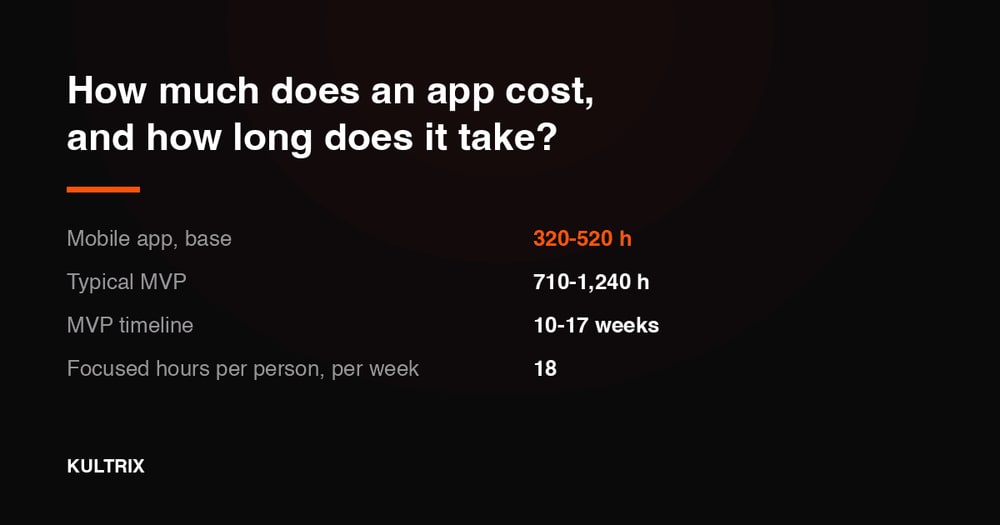
Timeline Typically 9-16 weeks

Businesses

Full App Build

Complete cycle from initial strategy and design to final launch.

What's included

  • Custom architecture & design
  • Seamless team integration
  • Production-ready release

Timeline Typically 20-40 weeks

Enterprises

Team Extension

Scale your team with expert developers to accelerate development.

What's included

  • Senior-level developers
  • Seamless team integration
  • Flexible management

Timeline Flexible / Long-term

OUR PROCESS

How We Work

We specialize in creating user-centered & innovative solutions. Delivering seamless digital experiences.

Discovery
ResearchFlow MapUser Interview
Solution
ArchitectureWireframesPrototyping
Development
Sprint CyclesCode ReviewQA Testing
Launch
DeploymentMonitoringHandoff

EXPERT INSIGHTS

Why Angular for Enterprise Web Applications?

Angular provides an opinionated, integrated platform that reduces architecture decision fatigue for large engineering organizations.

Go With Angular

  • Integrated platform

    Routing, HTTP, forms, DI, and testing conventions ship together.

  • Strong typing

    TypeScript-first from the ground up - no optional add-on.

  • Strict team conventions

    Angular CLI enforces structure so all teams write consistent code.

  • Enterprise longevity

    Google LTS policy means multi-year stability for large programmes.

Go With React

  • Smaller mental model

    Learn JSX and hooks - the rest is libraries you choose.

  • Flexible architecture

    Pick your own state manager, router, and data layer.

  • Faster prototyping

    Less boilerplate to write before seeing results.

  • Larger community

    More tutorials, Stack Overflow answers, and job candidates.

EXPERT GUIDANCE

Angular vs React

Angular

Architecture Decisions

Made for you - modules, services, and DI are prescribed.

TypeScript Integration

Native - cannot opt out, entire CLI assumes TS.

Testing Tooling

Jasmine + Karma included; TestBed for component isolation.

Bundle Size

Larger baseline; Ivy tree-shakes unused framework code.

Migration Path

Structured upgrade CLI (ng update) handles breaking changes.

Best For

Large enterprise apps, government portals, multi-team orgs.

React

Architecture Decisions

Made by your team - full freedom, more responsibility.

TypeScript Integration

Optional - add tsconfig and @types manually.

Testing Tooling

Jest + React Testing Library - community standard.

Bundle Size

Smaller core; bundle grows with the libraries you add.

Migration Path

Manual - review changelogs and update imports yourself.

Best For

Startups, SPAs, design-system-driven consumer products.

DELIVERABLES

What You Get

Module Architecture

Module Architecture

Feature-module structure with lazy loading, shared modules, and clear dependency boundaries.

RxJS Data Layer

RxJS Data Layer

Reactive data streams with proper subscription management and error handling.

NgRx Store

NgRx Store

Predictable state management with actions, reducers, selectors, and effects.

Form System

Form System

Typed reactive forms with custom validators and reusable form components.

Unit Test Suite

Unit Test Suite

Jest-based test suite with TestBed, component harnesses, and service mocking.

Performance Tuning

Performance Tuning

OnPush change detection, trackBy, virtual scrolling, and bundle optimization.

INDUSTRIES

Tailored Solutions for Your Specific Industry

We build powerful digital experiences across various sectors, ensuring your product meets unique market demands.

(01)

Fintech

Data-driven commerce solutions that improve journeys, boost sales, and optimize operations.

(02)

Retail

Data-driven commerce solutions that improve journeys, increase sales, and optimize operations.

(03)

Healthcare

Reliable medical platforms that protect patient data, simplify workflows, and support clinical accuracy.

(04)

B2B SaaS

Product-driven platforms that enhance workflows, automate processes, and scale with your business.

CASE STUDIES

Our Recent Work

View All

START YOUR PROJECT

Ready to build with expert Angular Development team?

Expert developers ready to deliver high-quality digital products.

FAQ

Frequently Asked Questions

Angular is an opinionated, full framework - it includes routing, forms, HTTP, dependency injection, and state management patterns out of the box. For large enterprise teams, this consistency across codebases reduces onboarding time and architectural debate.

For Angular 17+ projects we prefer standalone components - they simplify imports, reduce boilerplate, and are the direction Angular is heading. For existing NgModule-based apps, we work within that structure and migrate incrementally when appropriate.

For complex applications, we use NgRx Store with the Redux pattern - predictable state, time-travel debugging, and a clear separation between UI and business logic. For simpler apps, Angular services with BehaviorSubject streams are sufficient and less ceremonious.

Unmanaged subscriptions cause memory leaks. We use the async pipe in templates where possible, and takeUntilDestroyed() or a DestroyRef-based approach in component classes. We also use signals (Angular 16+) to reduce RxJS boilerplate in simpler reactive scenarios.

Yes. Angular Signals (stable since v17) offer a simpler reactivity model than RxJS for many UI scenarios. We adopt signals for local component state and simple derived values, reserving RxJS for complex async data streams.

We apply OnPush change detection to all components, use trackBy in ngFor, lazy-load feature modules by route, implement virtual scrolling for large lists, audit bundle size with the Angular CLI budget tool, and enable preloading strategies.

Yes. AngularJS (1.x) to modern Angular migrations are complex but well-understood. We use the ngUpgrade hybrid approach to run both frameworks side by side, migrating components incrementally until the AngularJS layer is fully replaced.

We use Jest as the test runner (faster than Karma/Jasmine), Angular Testing Library for component tests that focus on user behavior, and Cypress for end-to-end testing. We configure CI to run tests on every pull request.

Yes. We build shared Angular component libraries with Storybook documentation, strong typing, and design token integration. Libraries are published to a private npm registry for consumption across multiple Angular applications.

We use typed reactive forms (FormGroup<T> introduced in Angular 14) with custom async validators, cross-field validation, and reusable FormControl wrappers. Template-driven forms are reserved for simple cases only.

Angular is backend-agnostic. We commonly pair it with Node.js/Express APIs, .NET Core, or Spring Boot. We configure Angular HttpClient with interceptors for auth tokens, error handling, and retry logic regardless of the backend stack.

A medium-complexity enterprise Angular application takes 3-6 months. A focused feature module or library typically takes 4-8 weeks. Kultrix delivers Angular projects in two-week sprints with demo checkpoints throughout.